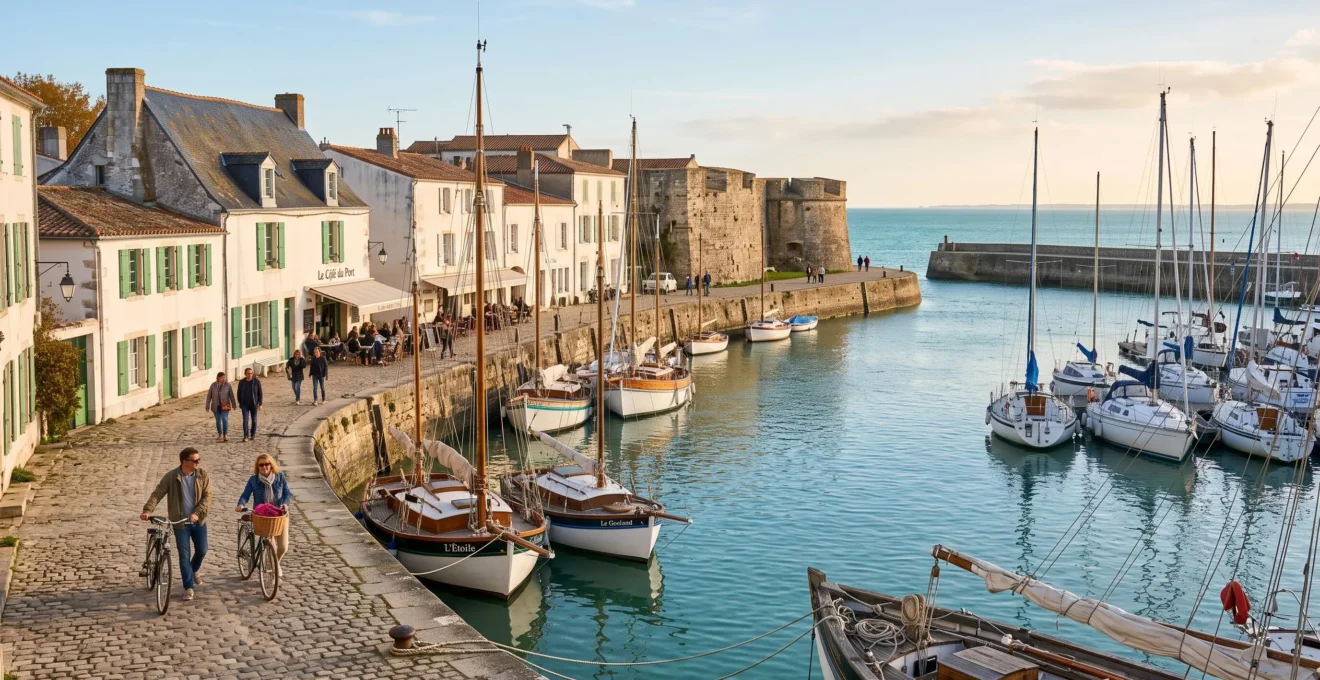
Direct answer: Stay in Saint-Martin-de-Ré if you want a lively, walkable harbour town with major heritage and a practical position for exploring the whole Île de Ré—especially if you plan to get around by bike and you don’t want to gamble on the “wrong” village for your holiday style.
If you’re still asking yourself “Which village should I base myself in on the Île de Ré?”, Saint-Martin-de-Ré is often a reassuring choice: you get atmosphere and services on your doorstep, plus a base that makes day trips feel simple rather than rushed.
Below, you’ll find a straightforward way to compare options (old town vs. nature, short stay vs. longer break, peak summer vs. shoulder seasons) so you can decide if Saint-Martin-de-Ré matches what you actually want from your Île de Ré holiday.
How to decide if Saint-Martin-de-Ré is right for you
- Want to explore widely? Pick Saint-Martin-de-Ré for an easy base to reach the island’s other villages by bike.
- Want “holiday life” without driving? Choose the harbour/old town area for walkability (cafés, shops, market atmosphere).
- Want calm and greenery? Look just outside town for a more natural setting, while staying close to amenities.
- Travelling in summer? Plan and book early: demand concentrates around the most practical bases.
Why Saint-Martin-de-Ré Is the Ideal Base for Exploring Île de Ré
Choose Saint-Martin-de-Ré as your base if your priority is to see a lot of the island without spending your days on logistics. The town sits in a part of the island that makes it easy to “radiate out” to other villages, beaches, salt marsh landscapes, and cycling routes—then come back to a place that still feels alive in the evening.
The simplest way to reduce the fear of booking the wrong village is to pick a base that works for several holiday styles at once: heritage strolls, harbour cafés, bike days, and quick access to practical services. Saint-Martin-de-Ré is one of the places on the Île de Ré where that mix is easiest to find within a compact, walkable centre.
If you’re planning to cycle, the island is particularly suited to it: the official Île de Ré Tourist Office highlights an réseau cyclable officiel de 138 km linking the island’s ten villages. That matters in real life because it lets you build day trips around scenery and stops, not around car parks.
Example day plan (hypothetical): start with a quiet morning walk on the ramparts, cycle out for a beach stop and a different village for lunch, then return for a harbour-side dinner—without having to change accommodation or drive back and forth.
What makes it different from other villages? Many villages on the Île de Ré are charming, but they don’t all offer the same balance between everyday services, heritage, and a central “hub” feeling. Saint-Martin-de-Ré is one of the easiest places to stay if you want both a strong sense of place and a practical base.
What Makes the Town’s Heritage and Harbour So Special?
If you want “things to do in Saint-Martin-de-Ré” without constantly hopping on a bike, this is where the town shines: you can fill a morning with simple, high-reward experiences—harbour views, old streets, and historic structures—then still have the rest of the day for the rest of the island.
The headline heritage is the Vauban ensemble. In its official management plan for the site, the French Ministry of Culture confirms that Saint-Martin-de-Ré is part of the UNESCO World Heritage listing (Fortifications of Vauban, inscribed in 2008) via the plan de gestion officiel Vauban 2019-2024. The practical takeaway for your stay: you’re not just “near a nice old wall”—you’re sleeping inside (or right beside) a place designed to be walked and seen at human pace.
A harbour town also changes the feel of your days. You can start and end with the same simple ritual—coffee by the boats, a late stroll along the quays—without needing a “big activity” to make the day work.
A typical morning (hypothetical): walk to a market, pick up picnic bits, loop past the harbour, then set off on a bike ride while the day is still cool. It’s a small rhythm, but it’s exactly what makes a base feel easy rather than effortful.
Choosing Where to Stay Around Saint-Martin-de-Ré
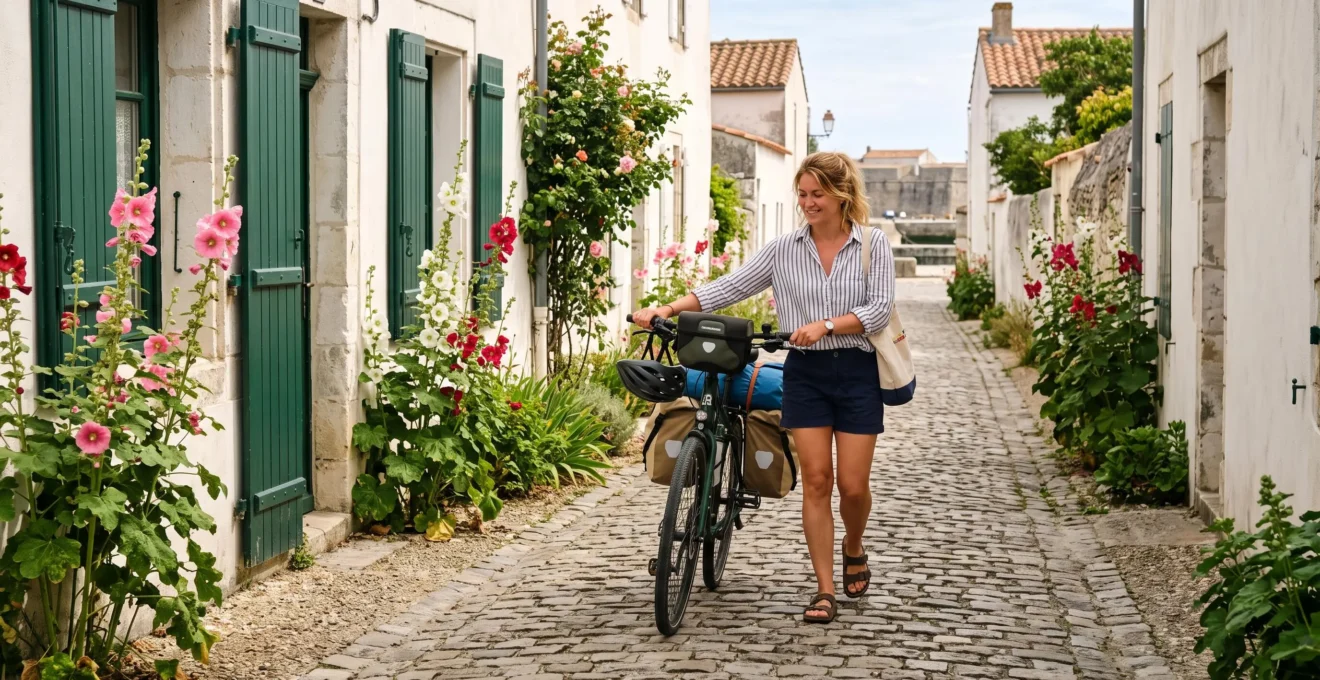
The best accommodation choice here isn’t “the best hotel” or “the best camping”—it’s the one that matches how you want your days to flow. Around Saint-Martin-de-Ré, you can roughly choose between old town/harbour convenience and more natural settings slightly outside the centre.
To avoid guessing, use the local, official accommodation overview as a reality check: the Île de Ré Tourist Office notes that you can choose central places with harbour views, stays close to the ramparts, or accommodation in a more natural setting—see its page on hébergements officiels à Saint-Martin-de-Ré. It’s useful when you’re comparing location styles, even before you compare individual properties.
Here’s a simple grid of criteria you can use to decide—without overthinking it.
| Decision criterion | Inside the old town / near the harbour | Just outside town / closer to nature |
|---|---|---|
| Daily rhythm | Step outside into cafés, harbour walk, shops; easy evenings without planning | Quieter mornings/nights; you’ll likely bike or walk a bit more for the harbour atmosphere |
| Best for | Short stays, first-time visitors, travellers who want a “central hub” feel | Families wanting space, travellers prioritising calm, nature-focused breaks |
| Getting around | Convenient for walkable errands; bike access still key for beaches/villages | Very bike-friendly; check how direct the ride is to the centre and your favourite routes |
| What to check before booking | Noise level in peak season; parking/arrival logistics if you come by car | Distance to the ramparts/harbour; access to groceries and bike storage |
Cas pratique
Hypothetical scenario: a nature-loving family wants easy beach time and low-stress evenings. They pick accommodation just outside Saint-Martin-de-Ré so the kids can unwind in a calmer setting, while keeping a short bike ride to the harbour for market mornings and an occasional restaurant night.
Cas pratique
Hypothetical scenario: a couple wants atmosphere and a “car-free” feel. They stay inside the old town, close to the harbour and ramparts, and use bikes for one longer loop each day—so they get both heritage evenings and island exploration.
If you’re travelling in summer, a practical base like Saint-Martin-de-Ré tends to be in high demand. The most actionable move is simple: choose your area first (old town vs. nature), then book as soon as your dates are fixed—rather than waiting to “see what’s left.”
If you’re curious about the “nature + comfort” side of holiday stays, this internal read on glamping ideas can help you define what you actually mean by “authentic” before you start comparing listings.
Practical Tips for Planning Your Île de Ré Holiday
Planning a smooth Île de Ré holiday from Saint-Martin-de-Ré comes down to two things: how you arrive and how you move around once you’re there. If you set those early, the rest (beaches, villages, nature stops) falls into place.
Most visitors structure their days around cycling and short local transfers. Because the island’s cycle network links villages, you can plan by “loops” rather than by “drives,” which often feels more relaxed on a flat island landscape.
- Pick your daily pace
Decide if you want one long ride a day or several short outings. This will shape where you stay (old town convenience vs. extra calm outside).
- Anchor 2–3 must-dos
Choose a heritage moment (ramparts/harbour), a beach moment, and a nature moment—then fill the gaps with nearby villages.
- Plan “return time” not just “go time”
It’s easy to ride out; what makes a day feel smooth is knowing when you want to be back for a shower, a harbour stroll, or dinner.
- Lock in essentials
Once dates are fixed, book accommodation and think about bike storage and easy access to the routes you’ll use most.
Sample itinerary (hypothetical, flexible): day 1 focused on Saint-Martin-de-Ré itself (ramparts + harbour); day 2 a longer bike loop with a beach stop; day 3 a mix of quieter landscapes and an earlier return for an evening in town. This is exactly where a central base pays off: you don’t lose time relocating.
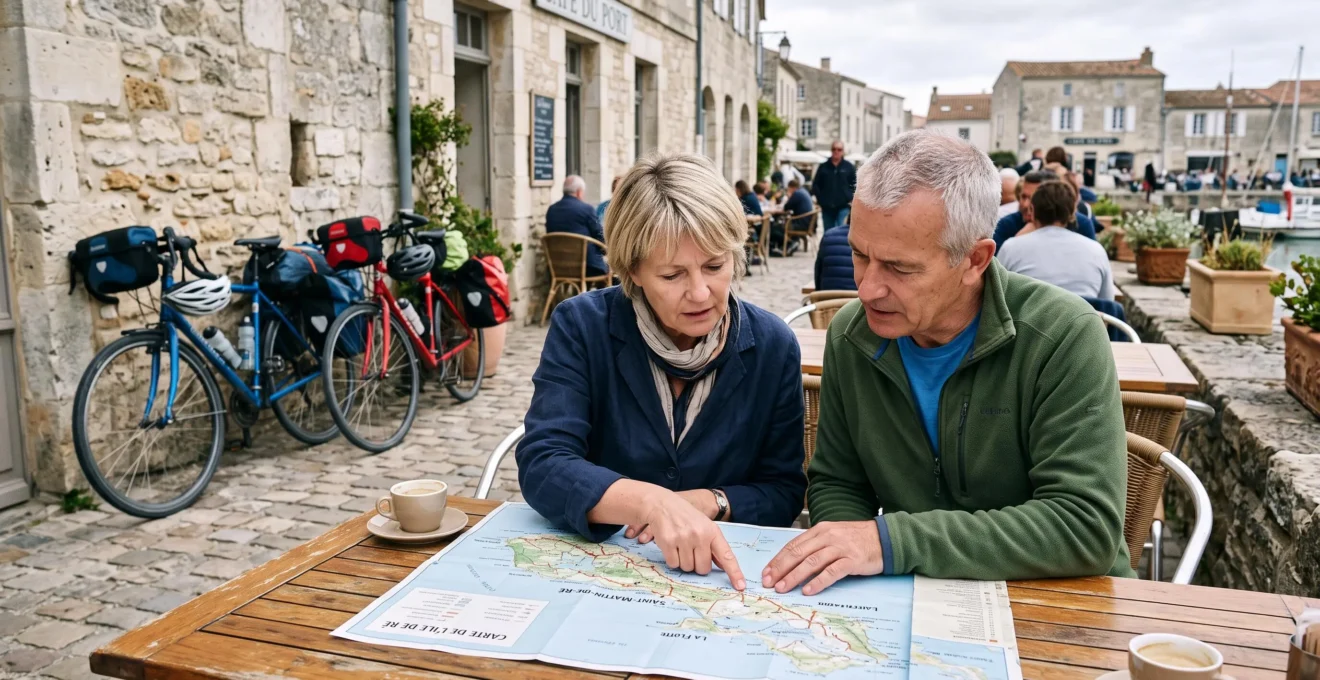
If you’re hesitating between villages, use this practical lens: where will you waste the least time? If your answer is “finding food, reaching bike routes, and deciding what to do each evening,” Saint-Martin-de-Ré is designed to remove friction—without preventing you from getting quiet time elsewhere on the island.
Avoid last-minute transport surprises: if you’re coming in peak season, build some buffer time into arrival and check access conditions close to departure, as traffic and parking constraints can affect your first evening.
When Is the Best Time to Visit Saint-Martin-de-Ré?
The best time to visit Saint-Martin-de-Ré depends on what you want to optimise: atmosphere, space, or ease of booking. The town can feel very different between peak summer and quieter periods, even though the core appeal (harbour + heritage + bike access) stays the same.
If your priority is lively evenings and the strongest “holiday buzz,” peak summer is usually when you’ll find the most activity in and around the harbour. The trade-off is straightforward: more people, and less flexibility on accommodation choice—so the decision (old town vs. nature) matters even more.
If you want a calmer stay while still enjoying cycling and comfortable daytime conditions, shoulder seasons are often the compromise many travellers look for: fewer crowds, an easier time to move around, and a more unhurried feel in the lanes and around the ramparts. The main limit is that opening hours and services can vary, so it’s worth checking what matters to you before you lock your dates.
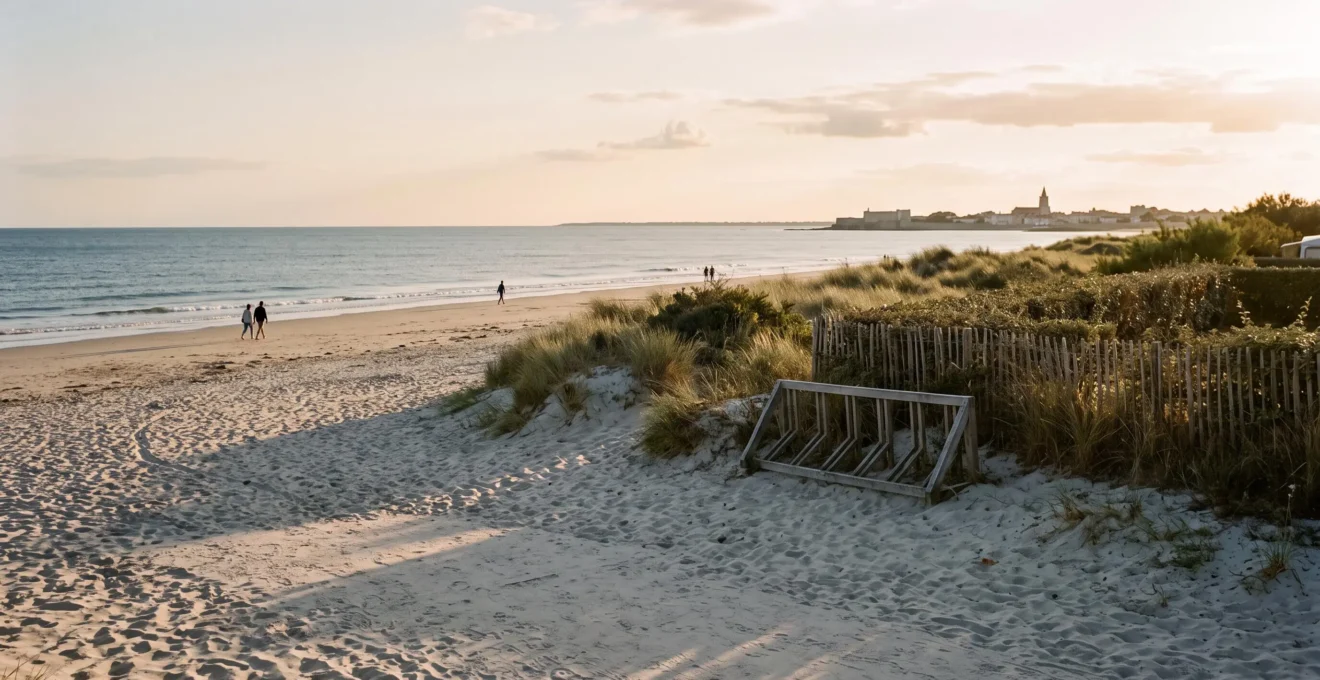
Booking logic you can use: if you know you’re travelling in summer, don’t wait for a “perfect” option—define your non-negotiables (location style, bike storage, quiet vs. central) and book once you find a match. If you can travel outside peak weeks, you may be able to prioritise charm and exact location more easily.
Is Saint-Martin-de-Ré a good base for a short Île de Ré holiday?
Should you stay in the old town or near nature around Saint-Martin-de-Ré?
How does Saint-Martin-de-Ré compare to other villages for exploring the island?
If your goal is to explore the Île de Ré without second-guessing your choice of village, Saint-Martin-de-Ré is a strong, low-regret base: heritage you can actually enjoy on foot, a harbour that gives your days a rhythm, and an island layout that makes cycling trips feel natural. Decide first on the vibe you want (old town energy or nature calm), then lock your dates early when you’re targeting the busiest weeks.