Transportation & Access
Getting to the trailhead is often the most underestimated part of any backcountry adventure. While hikers spend weeks planning their route and carefully selecting gear, the vehicle that carries them to that remote parking lot—and everything that happens before they lock the doors—frequently becomes an afterthought. Yet a flat tire on a washboard road, a dead battery in an empty lot, or a broken window after a multi-day trek can transform an epic journey into a logistical nightmare.
Transportation and access encompasses far more than simply driving from point A to point B. It includes understanding what questions to ask at the rental counter, knowing when to engage 4-wheel drive on steep inclines, recognizing how to deter thieves from targeting your unattended vehicle, and mastering navigation when your phone shows nothing but a gray void. These skills separate the adventurer who returns with stories from the one who returns with a tow bill.
This resource covers the essential knowledge every outdoor enthusiast needs to confidently reach remote destinations. From pre-trip vehicle inspections to emergency self-recovery techniques, each topic addresses a real challenge faced by those who venture beyond paved roads and into wilderness territory.
Preparing Your Rental Vehicle for Backcountry Roads
Renting a vehicle for backcountry access introduces unique challenges that airport pickup routines rarely address. The standard walk-around inspection takes on critical importance when your destination involves unmaintained roads, and understanding your insurance coverage can mean the difference between a minor inconvenience and a financial disaster.
Pre-Departure Inspection Essentials
Before leaving the rental lot with any 4×4 or high-clearance vehicle, a methodical inspection protects both your safety and your wallet. Beyond the usual scratch-and-dent documentation, focus on elements specific to off-road capability:
- Verify the spare tire is present, properly inflated, and matches the other tires
- Confirm the jack and tire iron are included and functional
- Check fluid levels: oil, coolant, brake fluid, and windshield washer
- Test all four-wheel-drive modes before leaving paved surfaces
- Inspect tire tread depth—worn tires lose traction dramatically on loose surfaces
Document every existing scratch, dent, and chip with timestamped photos. Pay special attention to the undercarriage, bumpers, and rocker panels where off-road damage typically occurs.
Understanding Insurance Coverage for Unpaved Roads
Many travelers assume their credit card’s rental coverage or the basic insurance package extends to all driving conditions. This assumption often proves costly. A significant number of rental agreements include a pavement clause that voids coverage the moment your tires leave asphalt. Before signing, explicitly ask whether the policy covers damage sustained on dirt roads, forest service roads, or unimproved surfaces. Some specialty rental companies cater specifically to adventure travelers and offer appropriate coverage, though at premium rates.
Planning Your Airport-to-Trailhead Timeline
Rental counter delays can cascade into missed daylight, dangerous night driving on unfamiliar roads, or arriving at a trailhead too late to start safely. Building buffer time into your schedule prevents rushed decisions. Allow at least two hours between your flight landing and your planned departure from the airport—this accounts for baggage claim, shuttle transport, paperwork, vehicle inspection, and the inevitable queue of travelers ahead of you. If your trailhead involves hours of dirt road driving, consider staying near the airport overnight and starting fresh in the morning.
How Do Off-Road Driving Techniques Prevent Costly Damage?
Piloting a vehicle on unpaved surfaces requires a fundamentally different approach than highway driving. Speed, momentum, gear selection, and line choice all shift when pavement disappears. Understanding these principles protects both your vehicle and your ability to reach—and return from—remote destinations.
When and How to Use 4-Low
Four-wheel drive systems typically offer multiple modes, and selecting the wrong one causes either mechanical stress or loss of traction. 4-High suits moderate off-road conditions at normal speeds—gravel roads, light mud, or packed snow. 4-Low becomes essential when you need maximum torque at minimal speed: steep inclines, deep sand, rock crawling, or situations requiring precise throttle control. Engaging 4-Low multiplies your gear ratio, allowing the engine to work efficiently without lugging. Never use 4-Low on dry pavement, as the drivetrain stress can cause serious damage.
Navigating Rocks, Water, and Washboard Roads
Each terrain type demands specific techniques. When crossing rocky sections, identify the high point of each obstacle and straddle it with your tires rather than driving over it—this protects your differential and oil pan from impact. Water crossings require knowing your vehicle’s air intake location; even moderate depths can hydrolock an engine if water enters the intake, causing catastrophic internal damage.
Washboard roads—those corrugated surfaces formed by repeated traffic—create severe vibration at certain speeds. Paradoxically, driving too slowly maximizes discomfort and component stress, while finding the right speed allows tires to skim across the ridges more smoothly. Experiment between 25-45 mph to find the sweet spot for your specific vehicle and road conditions.
Protecting Your Vehicle from Terrain Damage
Understanding your vehicle’s approach angle, departure angle, and ground clearance prevents expensive repairs. The approach angle determines how steep an incline you can climb without the front bumper striking the ground; the departure angle governs the same for descending or cresting hills. Before committing to a challenging section, exit the vehicle and scout on foot. Look for high-center situations where your chassis might ground out, and identify bypass routes when available.
Why Does Standard GPS Fail on Remote Access Roads?
Relying exclusively on smartphone navigation has stranded countless adventurers on nonexistent roads or sent them miles in the wrong direction. Understanding why this happens—and how to prepare—separates reliable backcountry navigation from hopeful guessing.
Consumer mapping applications like Google Maps optimize for paved roads and populated areas. Their data for logging roads, forest service routes, and seasonal access roads is frequently outdated, incomplete, or entirely absent. These apps also require cellular data to load map tiles, meaning you might lose navigation precisely when you need it most.
Preparation involves downloading offline maps before departing cellular coverage, but not all offline solutions are equal. Specialized apps designed for backcountry travel use different data sources—often including trail systems, fire roads, and unmaintained routes that consumer apps ignore. Carrying physical USGS topographic maps and a compass provides redundancy when electronics fail. Learning to read contour lines and orient yourself without technology remains a fundamental backcountry skill that no app can replace.
What Keeps Your Vehicle Safe While You’re on the Trail?
Leaving a vehicle unattended at a remote trailhead for hours or days exposes it to human thieves and wildlife alike. Strategic prevention measures dramatically reduce your risk of returning to a broken window or chewed wiring harness.
Deterring Break-ins During Extended Absences
The clean car theory forms the foundation of trailhead security: an empty, boring-looking vehicle attracts far less attention than one containing visible bags, electronics, or gear. Remove all items from sight, including charging cables that suggest a phone might be hidden. Leave the glovebox open to demonstrate nothing valuable hides inside. Some hikers leave a note on the dash indicating when they’ll return, signaling that the car isn’t abandoned while also suggesting someone expects it to be there.
Preventing Rodent Damage
Squirrels, mice, and other rodents view parked vehicles as shelter and chewing opportunities. In certain areas, porcupines target brake lines for their salt content, while rodents nest in engine compartments and gnaw wiring insulation. Parking away from obvious rodent habitat—rock piles, dense brush, or established nesting areas—reduces risk. Some adventurers place mothballs or peppermint-soaked rags around the engine bay as deterrents, though effectiveness varies.
Key Storage Strategies
Carrying your only car key on a multi-day backpacking trip introduces real risks—loss, water damage, or destruction in a fall. Yet magnetic hide-a-key boxes under the chassis create obvious targets for thieves who know exactly where to look. Potential solutions include carrying the key in a waterproof container, hiding a spare in an unconventional location only you would know, or arranging a trusted shuttle driver to retrieve your keys at the trailhead.
How Do You Handle Emergencies Miles from Help?
Self-reliance becomes mandatory when the nearest assistance might be hours away. Carrying the right equipment matters less than knowing how to use it effectively in challenging conditions.
Power Independence: Jump Starters vs. Jumper Cables
Traditional jumper cables require a second vehicle—a resource rarely available at remote trailheads. Compact lithium-ion jump starter packs provide the ability to revive a dead battery independently. These devices weigh under a kilogram, hold their charge for months, and often include USB ports for device charging. Verify your unit can handle your vehicle’s engine size, as starter packs are rated for specific cranking amperage requirements.
Tire Changes on Soft Terrain
Standard vehicle jacks assume a firm, flat surface—an assumption that fails spectacularly on sand, mud, or loose gravel. Without a stable base, the jack sinks rather than lifts, or worse, collapses under load. A base plate—a rigid board or commercial product designed for this purpose—distributes the jack’s weight across a larger surface area. Carrying a small piece of plywood or a purpose-built plastic jack base adds minimal weight while providing essential stability.
Descending Safely: Engine Braking Techniques
Steep descents on dirt roads tempt drivers to ride the brakes continuously, a habit that causes brake fade—the progressive loss of stopping power as friction material overheats. Instead, selecting a lower gear allows the engine’s compression to control speed, a technique called engine braking. Manual transmissions offer direct control, while automatics typically allow gear selection through shifter positions or paddle controls. Reserve your brakes for fine-tuning speed rather than primary deceleration, and your stopping power will remain available when you truly need it.
Transportation and access skills form the foundation upon which every backcountry adventure rests. Mastering vehicle preparation, off-road techniques, navigation independence, security measures, and emergency procedures transforms uncertain wilderness travel into confident exploration. Each topic addressed here deserves deeper examination based on your specific destinations and vehicle—use this overview as your starting point for developing comprehensive competence in reaching the places that matter most to you.
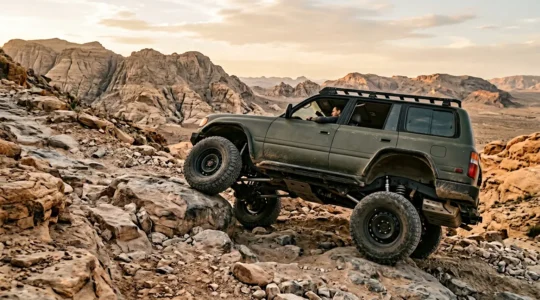
Driving High-Clearance 4x4s: When to Engage 4-Low on Steep Inclines?
In summary: Engage 4-Low for maximum control, not speed, on challenging off-road terrain. Use it for slow-speed rock crawling to protect the vehicle’s undercarriage. Select 4-Low before descending steep, loose hills to utilize engine braking and prevent brake failure. It…
Lire la suite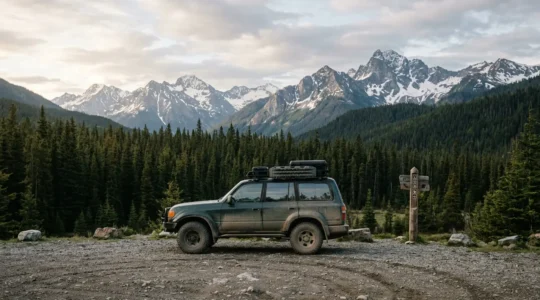
Parking at Remote Trailheads: How to Deter Break-ins When You’re Gone for Days?
True trailhead security isn’t about making your car unbreakable; it’s about making it an unprofitable target and ensuring you can always drive home. Deter thieves by altering their risk-reward calculation: make your car look completely empty and uninteresting. Prepare for…
Lire la suite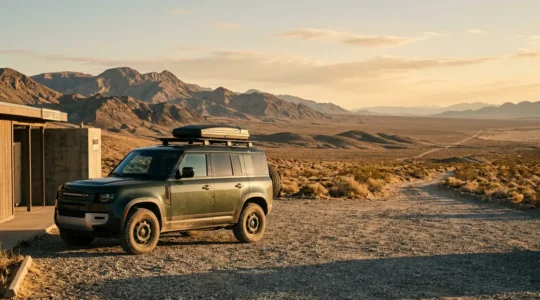
Renting Off-Road Vehicles: How to Inspect a 4×4 Before Leaving the Lot?
Your rental inspection is not about finding cosmetic dings; it’s a pre-mortem analysis to identify the mechanical liabilities that will strand you on the trail and empty your wallet at the counter. Credit card insurance often has « pavement clauses » that…
Lire la suite