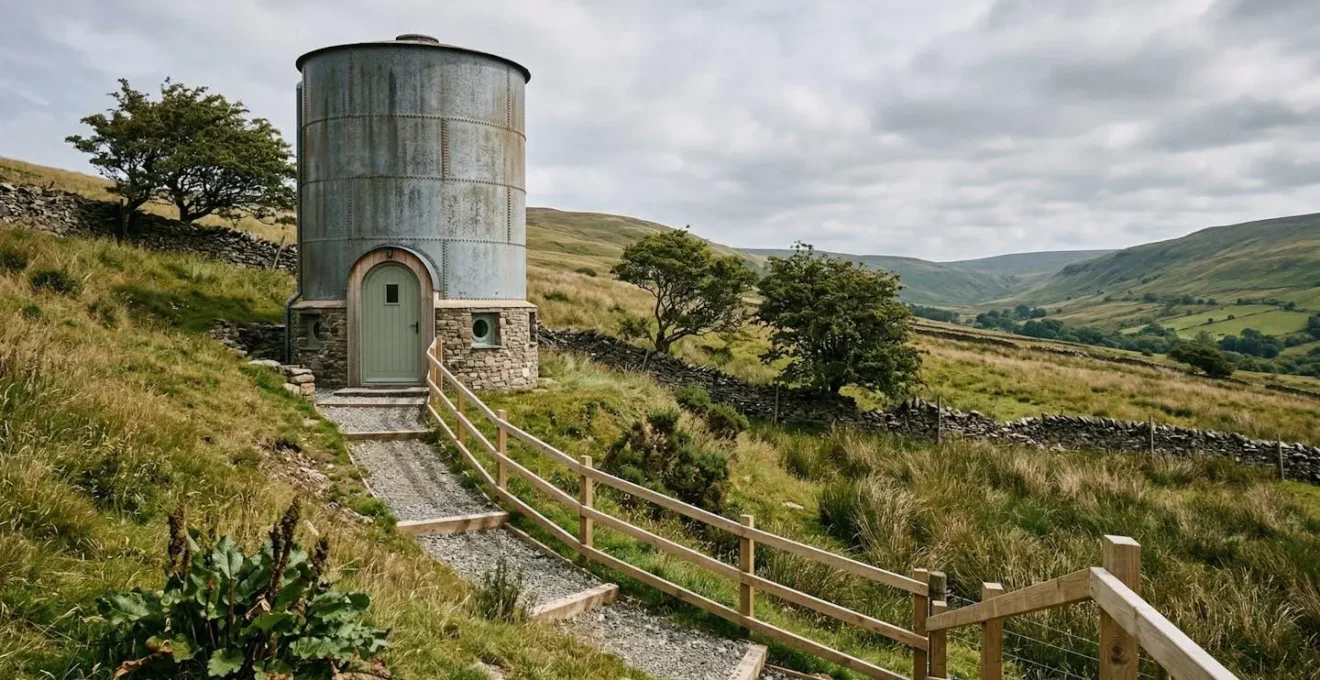
The charm of a unique rental hides non-standard risks that basic insurance and platform guarantees often fail to cover.
- Standard policies may not apply to structures without building codes, leaving you exposed to liability and uncovered damages.
- Booking platforms offer limited recourse, especially for issues deemed “assumed risk” or consequential losses like non-refundable flights.
Recommendation: Shift from a traveler’s mindset to an inspector’s. Conduct rigorous pre-booking due diligence and verify your travel insurance policy explicitly covers the specific risks of your unconventional stay.
The allure is undeniable: a night in a converted grain silo, a week in a modernized cave, or a weekend suspended in a luxury treehouse. These unique travel experiences, often found on platforms like Airbnb, promise unforgettable memories far from the sterile environment of a standard hotel. For the adventurous traveler, they represent the pinnacle of authentic, Instagram-worthy lodging. However, this appeal masks a complex and often overlooked layer of risk. When you trade a hotel room for a hobbit hole, you also trade standardized safety regulations and clear-cut liability for a gray area of host responsibility and ambiguous insurance coverage.
The common advice—”check reviews” and “get travel insurance”—is dangerously inadequate in this context. It fails to address the fundamental problem: these structures exist outside of conventional building codes. What happens if the charmingly “rustic” ladder breaks? Who is liable if a loft railing doesn’t meet child safety standards? Mainstream travel insurance policies are written for predictable scenarios, not for the inherent quirks of a home built in a cliffside. The core issue is not simply about being careful; it’s about understanding that you are often stepping into a legal and insurance void.
This guide adopts a different, more rigorous perspective. We will approach booking unusual lodging not as an act of faith, but as a process of forensic due diligence. The goal is to shift your mindset from merely hoping for the best to systematically identifying, questioning, and mitigating the non-standard risks that neither booking platforms nor basic insurance policies are designed to handle. We will dissect the fine print and empower you with the precise questions and verification steps needed to protect your safety and your finances.
This article provides a structured framework for assessing the real-world risks of unconventional accommodations. Below, you will find a detailed breakdown of critical safety and insurance checkpoints, from physical accessibility and child safety to refund policies and remote location hazards.
Summary: Your Guide to Insuring and Securing Unique Stays
- Ladders and Trapdoors: How to Verify if Your “Quirky” Stay is Physically Accessible?
- Railings and Lofts: Is This Converted Barn Safe for Toddlers?
- Plumbing in Caves: What “Rustic Bathroom” Really Means in Listing Descriptions?
- The Host vs The Platform: Who Refunds You if the Treehouse is Double Booked?
- Soft Bags vs Suitcases: Why You Can’t Bring Hard Luggage into a Tiny House?
- Extraction Insurance: Does Your Policy Cover Helicopter Rescue at 6000m?
- Pavement Clause: Does Your Credit Card Cover Damage on Dirt Roads?
- Renting Treehouse Cabins: How to Ensure Safety for Children and Pets at Height?
Ladders and Trapdoors: How to Verify if Your “Quirky” Stay is Physically Accessible?
The “charming” and “unique” access points of a quirky rental—like a steep ship’s ladder to a sleeping loft or a trapdoor entrance—are often the primary source of unspoken risk. Unlike standard staircases, these features are rarely governed by residential building codes, placing the burden of risk assessment squarely on you, the guest. This is a critical area of premises liability, where an injury could lead to a complex legal dispute over whether the host provided a safe environment or if you, the guest, “assumed the risk” by booking such a property. Relying on photos alone is insufficient, as wide-angle lenses can distort the steepness and stability of a ladder.
Your pre-booking investigation must be forensic. You need to gather evidence of the access point’s real-world usability and the host’s preparedness for emergencies. Imagine trying to navigate a wet, vertical ladder in the dark during a medical event. The absence of a standard staircase is not just an inconvenience; it’s a fundamental safety and insurance variable. An insurer could argue that by willingly choosing a property with a ladder instead of stairs, you accepted a higher level of personal risk, potentially complicating a claim for an injury sustained during its use. This makes pre-trip verification essential.
Action Plan: Verifying Unconventional Access Points
- Request a video tour showing someone actively using the ladder, trapdoor, or unconventional access point to assess stability and steepness that photos may misrepresent.
- Ask the host to describe in detail how emergency medical services would access the property in case of injury or medical emergency.
- Verify that smoke and carbon monoxide alarms are installed and functioning before finalizing your booking.
- Document any broken rungs, unstable structures, or hazardous conditions immediately upon arrival with timestamped photos and videos.
- Contact your travel insurance provider to confirm whether injuries from ‘assumed risk’ activities (like climbing ladders in unconventional lodging) are covered under your policy.
Railings and Lofts: Is This Converted Barn Safe for Toddlers?
Converted barns and industrial lofts often feature open-plan upper levels and mezzanines that are architectural highlights for adults but significant hazards for children. The key danger lies in elements that are not up to modern child safety standards, such as railing baluster spacing and unsecured heavy furniture. A gap in a railing wider than 4 inches can create an entrapment or fall risk for a small child. Similarly, freestanding bookshelves or dressers in a rental property are unlikely to be anchored to the wall, creating a serious tip-over hazard. The scale of this issue is significant, with U.S. Consumer Product Safety Commission data indicating around 22,500 furniture and TV tip-over injuries annually, a substantial portion involving children.
For parents, booking such a property requires a proactive safety audit. You cannot assume the host has childproofed the space, especially if the listing isn’t explicitly marketed to families. This is where photo-forensics becomes a critical skill: scrutinize listing photos not for their aesthetic appeal, but for potential dangers. Look closely at railings, the proximity of furniture to ledges, and the types of windows used. Since you cannot modify the property’s structure, your strategy should be to bring a portable safety kit to temporarily mitigate these risks upon arrival.
As the image highlights, the construction details of a railing are paramount. Your pre-booking communication with the host should include direct questions about these specifics. Asking for exact measurements of railing gaps is a reasonable part of your due diligence. For added security, a portable safety kit is indispensable. Here are the key items to consider packing:
- Pressure-mounted baby gates to secure loft openings and stairways without permanent installation.
- Outlet covers and cabinet locks to childproof electrical hazards and storage areas.
- Verification that loft railing baluster spacing is less than 4 inches (ask the host for exact measurements).
- A request for furniture to be anchored to walls before arrival, or bring your own furniture straps.
- Documentation of all safety measures you take as ‘due diligence’ to strengthen potential insurance claims.
Plumbing in Caves: What “Rustic Bathroom” Really Means in Listing Descriptions?
In the world of quirky rentals, descriptive terms like “rustic,” “charming,” and “off-grid” can be euphemisms for substandard or non-functional utilities. A “rustic bathroom” in a cave dwelling might mean a composting toilet and a gravity-fed shower with non-potable water—a far cry from the stylized photos in the listing. This discrepancy between description and reality is a major source of vacation disputes. More importantly, it can create a situation where a property is not just disappointing, but legally uninhabitable. This is a critical distinction for insurance purposes. A trip interruption policy may not cover you if you simply don’t like the decor, but it is designed to activate if essential services like functional, sanitary plumbing are absent.
If you arrive to find the plumbing is non-existent, unsanitary, or broken, your immediate actions are crucial for securing a refund from either the platform or your insurer. The key is to systematically document the gap between what was promised and the reality. Do not rely on phone calls with the host, which leave no paper trail. Instead, create an undeniable body of evidence that proves the accommodation is “materially different” from its listing or poses a health risk. This documentation is your primary leverage in any dispute resolution process.
Case Study: When “Uninhabitable” Triggers Insurance
A family’s river house rental was compromised when heavy rain flooded the first floor and disabled the septic system, rendering the toilets useless. The host refused a refund. However, their travel insurance policy with trip interruption benefits was activated. The insurer deemed the rental ‘uninhabitable’ due to the extended loss of an essential utility (water/sewage), a covered reason under their policy. Because the family had thoroughly documented the damage and their communications with the host, they successfully filed a claim and were reimbursed for their non-refundable prepaid trip costs, allowing them to relocate.
To protect yourself, you must act like an investigator from the moment you notice a problem. Follow a strict protocol to build your case:
- Take timestamped photos and videos immediately upon discovering the bathroom differs from the listing.
- Test water pressure and document results on video, noting any stagnant water or unusual odors.
- Screenshot the original rental description before the host can alter it.
- Document all written communications with the host via platform messaging.
- File a claim with both the booking platform and your travel insurer simultaneously.
The Host vs The Platform: Who Refunds You if the Treehouse is Double Booked?
Arriving at your long-awaited treehouse only to find another family already settled in is a nightmare scenario that highlights a critical friction point in the vacation rental ecosystem: who is responsible? Is it the host who made the error, or the platform that processed the booking? The answer is complex, and the level of support you receive varies dramatically between platforms like Airbnb and Vrbo. While both will typically refund the cost of the accommodation, this often fails to cover the significant consequential losses, such as non-refundable flights, pre-booked activities, or the inflated cost of a last-minute replacement hotel. This is a major coverage gap that platform guarantees do not fill.
This is precisely where a robust travel insurance policy with trip interruption coverage proves its worth. While booking platforms focus on the accommodation itself, travel insurance takes a holistic view of your entire trip’s finances. A double-booking is a classic “unforeseen event” that can trigger trip interruption benefits, allowing you to claim reimbursement for those ancillary costs that the platform’s policy ignores. The financial stakes are not trivial; according to Squaremouth’s 2024 travel insurance data, over 40% of paid claims stemmed from trip cancellations or interruptions, demonstrating how frequently such disruptions occur.
Understanding the differences in how each entity handles this crisis is key to managing the situation effectively. The following table breaks down the typical responses.
| Platform/Policy | Guest Refund Policy | Rebooking Assistance | Additional Compensation | Consequential Losses Covered |
|---|---|---|---|---|
| Airbnb | Full refund of reservation cost | Platform helps find similar place; may offer booking credit. | Booking credit or travel credit in lieu of cash refund. | No – only covers accommodation cost. |
| Vrbo | Full refund including service/cleaning fees. | Host is required to find alternative accommodation. | Host covers transport to new property and price difference. | No – platform caps apply. |
| Travel Insurance (Trip Interruption) | N/A – separate policy | May cover forced relocation costs. | Covers unused prepaid costs AND consequential losses. | Yes – explicitly covers non-refundable flights, activities, etc. |
Soft Bags vs Suitcases: Why You Can’t Bring Hard Luggage into a Tiny House?
The minimalist charm of a tiny house or a pod cabin comes with a very practical constraint: a severe lack of space. Many hosts of such properties explicitly state in their rules that large, hard-shell suitcases are not permitted, as they can damage the custom-built interiors and there is simply no room to store them. This forces travelers into a compromised position: either leave bulky luggage in their vehicle for the duration of their stay or downsize to soft duffel bags. Both options introduce new layers of risk that are often unaddressed by standard insurance.
Leaving luggage in a car, especially at a remote or unsecured location, dramatically increases the risk of theft. Even if your travel insurance includes personal effects coverage, policies often have specific exclusions for items stolen from an unattended vehicle. Furthermore, should you accidentally damage the rental’s interior with your luggage, you could be held liable. Your homeowners or renters insurance might offer some liability protection, but it’s not a guarantee. Therefore, a luggage liability strategy is not an overreaction but a necessary part of your pre-trip planning for any space-constrained lodging.
As this interior view suggests, every square inch is meticulously planned, leaving no room for error—or bulky luggage. Your strategy must be proactive and multi-faceted, covering both property damage liability and theft prevention. Before you even pack, you should:
- Check if your homeowners or renters insurance liability coverage extends to accidental damage you cause to rental properties.
- If forced to leave luggage in your vehicle, invest in a portable car safe or lockbox for valuables.
- Research insured storage locker facilities near the lodging for high-value items that might exceed vehicle theft policy limits.
- Verify if specialized equipment (like skis or surfboards) requires an additional insurance rider beyond standard ‘personal effects’ coverage.
- Document the condition of the rental’s interior with photos upon arrival to protect yourself from false damage claims related to luggage.
Extraction Insurance: Does Your Policy Cover Helicopter Rescue at 6000m?
Many of the most desirable quirky lodgings—remote mountain huts, secluded desert domes, or isolated coastal cabins—are defined by their magnificent isolation. This very isolation, however, creates an extreme risk: the potential need for emergency medical evacuation from a location without road access or reliable cell service. A standard travel medical policy might cover hospital bills, but it often has significant coverage gaps regarding the search, rescue, and transportation to get you to that hospital. A helicopter rescue at high altitude can easily run into tens of thousands of dollars, a cost few are prepared to bear out of pocket. In fact, even an average repatriation claim costs around $12,000, a figure that skyrockets in complex rescue scenarios.
Therefore, for any trip to a remote location, your insurance due diligence must go beyond standard medical coverage. You need to explicitly verify coverage for “search and rescue” and “medical evacuation.” These are distinct clauses. “Search and rescue” covers the cost of finding you, while “evacuation” covers transporting you from an established point (like a trail-head) to a hospital. Many policies exclude operations above a certain altitude or for activities deemed “extreme sports,” which could include the simple act of hiking to your cabin. Preparing a “no-signal zone” emergency protocol for your contacts at home is not paranoid; it is essential risk management.
Your emergency activation protocol should be a clear, written document left with a trusted contact. It must include:
- Your exact policy number and the insurer’s 24/7 assistance phone line.
- Your detailed itinerary with GPS coordinates for the lodging.
- Explicit authority for your contact to activate rescue services on your behalf if you are unreachable after a set time.
- Confirmation that your policy covers “search and rescue,” not just “medical evacuation.”
- Verification that your specific altitude and planned activities are not listed under the policy’s exclusions.
Pavement Clause: Does Your Credit Card Cover Damage on Dirt Roads?
The journey to a secluded silo or a rustic cabin often involves traversing unpaved, gravel, or dirt roads. This presents a significant and commonly overlooked insurance trap related to your rental car. While many travelers rely on the collision damage waiver (CDW) offered by their premium credit cards, they are often unaware of a critical exclusion: the “pavement clause.” Most credit card insurance policies, and even many standard rental company policies, are voided the moment the vehicle leaves a paved road. This means any damage—from a cracked windshield caused by flying gravel to a punctured tire—becomes your full financial responsibility.
This is not a minor detail. As comprehensive travel insurance policy comparisons show, tire and windshield damage—the most common issues on unpaved roads—are almost universally excluded from credit card and basic rental insurance. Modern rental cars are often equipped with GPS telematics that can report a contract violation to the company in real-time if you venture off-pavement. Furthermore, even if the damage is covered, you may still be liable for “Loss of Use” fees, which are daily charges the rental company levies while the car is being repaired and out of service. These fees are rarely covered by credit card policies.
Before you even turn the key, a thorough coverage verification is in order. Your due diligence at the rental counter can save you thousands. Implement this checklist:
- Request detailed coverage documentation to see if GPS tracking is used to void coverage on unpaved roads.
- Look for premium rental policies that specifically list “tire and windshield coverage” as an add-on.
- Search your policy for “Loss of Use” fee coverage language.
- Document the condition of tires and the windshield with photos before leaving the lot.
- Explicitly ask the rental agent if your intended route violates the contract and get their response in writing if possible.
Key Takeaways
- The “charm” of unique rentals often means a lack of safety regulations, shifting risk assessment to the traveler.
- Standard insurance and platform guarantees have significant gaps concerning liability, property damage, and consequential losses for non-standard lodging.
- A proactive “due diligence” approach—investigating, documenting, and verifying coverage for specific risks—is essential before booking.
Renting Treehouse Cabins: How to Ensure Safety for Children and Pets at Height?
Treehouse cabins represent a unique combination of risks: they are elevated structures, often self-built by hosts, and situated in natural environments. This elevates the concept of premises liability to a new level. The structural integrity of the treehouse itself—from the health of the host tree to the quality of the bolts and cross-bracing—is a variable you cannot easily assess. This inherent uncertainty increases the statistical risk of an incident. In fact, an analysis of short-term rental liability suggests a property owner with just a few rentals has a roughly 1-in-3 chance of a claim-worthy accident over five years. When that property is 30 feet in the air, the severity of any potential accident is magnified.
For travelers with children or pets, the risks are even more acute. A balcony that seems safe for an adult can be a serious hazard for a small dog or a curious cat. Unsecured railings, wide gaps in decking, and the presence of toxic local plants are all part of the risk matrix. Your due diligence must therefore extend to your non-human family members. Your pet’s behavior can be unpredictable in a new, elevated environment, and you must verify whether your pet insurance or travel insurance provides third-party liability coverage in case your panicked pet causes an accident or property damage.
Your pre-booking investigation should involve a detailed “photo-forensics” analysis and direct, specific questions to the host. A pet-friendly listing is not the same as a pet-safe one. Use this checklist to guide your inquiry:
- Ask the host: “Is the balcony fully enclosed with narrow-gap mesh?” (Specify a maximum gap size appropriate for your pet).
- Request confirmation: “Are there any interior or exterior plants that are toxic to dogs/cats?”
- Verify your insurance policy’s liability portion covers incidents if your pet causes injury or damage.
- Analyze listing images for structural red flags: rusted bolts, an unhealthy-looking host tree, or a lack of cross-bracing.
- Document any structural concerns immediately upon arrival, as poor engineering could be a factor in an insurance claim.
Before embarking on your next adventure to a one-of-a-kind rental, the logical next step is to have your current insurance policies professionally reviewed to identify and close these critical coverage gaps.