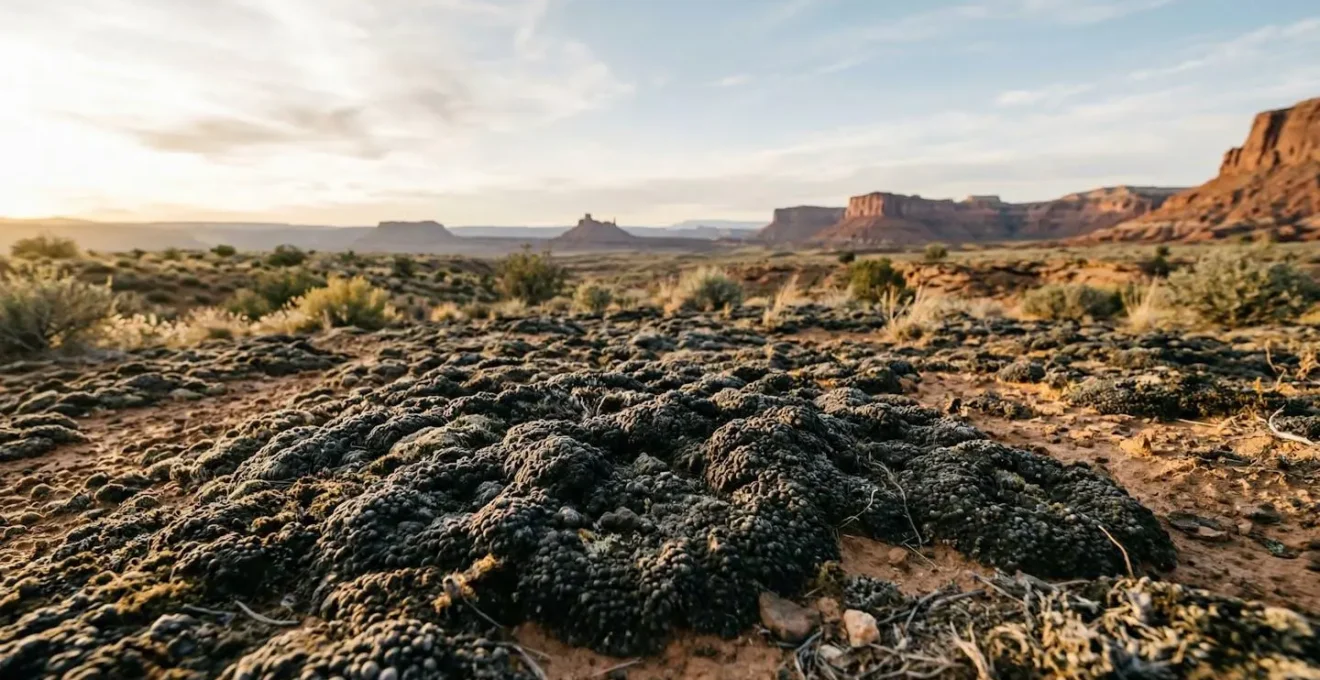
True zero-impact camping goes beyond basic rules; it requires understanding the hidden ecological consequences of our actions in fragile environments.
- Microscopic soil crusts, vital to desert life, can be destroyed for centuries by a single footstep.
- Common practices like using ‘biodegradable’ soap directly in water sources or burning scarce deadwood for a fire disrupt fragile nutrient cycles.
Recommendation: Shift your mindset from a visitor following rules to an informed guardian who actively protects ecosystem integrity by knowing the ‘why’ behind each action.
For the eco-conscious camper, the principles of Leave No Trace (LNT) are a familiar mantra: pack it in, pack it out; stay on the trail; respect wildlife. These are the essential foundations of responsible outdoor recreation. Yet, in the planet’s most fragile ecosystems—the arid deserts with their living soils and the sparse, slow-growing tundras—these basic rules are merely the starting point. To travel through these landscapes without leaving a scar requires a deeper level of understanding, a shift from simply following rules to internalizing the ecological science behind them.
Many believe that a “biodegradable” label makes soap safe for a lake, or that burning fallen wood is a harmless, rustic tradition. But what if the real key to preservation lies not in what we do, but in understanding the profound, often invisible, consequences of our actions? The difference between a visitor and a guardian is knowledge. It’s knowing that a single misplaced step can erase decades of growth, that “clean” waste can poison a water source, and that a friendly gesture toward an animal can seal its fate.
This guide moves beyond the basics. We will explore the hidden science that governs these delicate environments. We’ll dissect the myths, provide advanced techniques, and arm you with the perspective of a conservation ecologist. The goal is not to restrict your enjoyment of the wild, but to enhance it by transforming you into an active and informed protector of the very beauty you seek.
This article provides a detailed framework for understanding your impact. The following sections break down the most critical considerations for becoming a true steward of fragile lands, from the ground beneath your feet to the wildlife you encounter.
Summary: A Scientific Guide to Zero-Impact Wilderness Travel
- Why One Footstep Can Destroy 50 Years of Soil Growth in the Desert?
- How to Pack Out Human Waste When Catholes Are Not an Option?
- Established Site vs Virgin Ground: Which Choice Protects the Ecosystem More?
- The Biodegradable Soap Myth: Why You Still Can’t Wash in the Lake?
- Stove vs Campfire: The Ecological Cost of Burning Dead Wood in Tundras
- The Alert Distance: How to Tell When an Animal Is About to Run?
- The 100-Yard Rule: How to Enjoy the Sighting Without Altering Behavior?
- Protecting Native Biodiversity: Why Feeding Wildlife Destroys Local Ecosystems?
Why One Footstep Can Destroy 50 Years of Soil Growth in the Desert?
In arid and semi-arid lands, the dark, bumpy, and sometimes crunchy soil surface is not dirt; it’s a living, breathing community known as cryptobiotic soil or a biological soil crust. This crust is a complex web of cyanobacteria, lichens, mosses, algae, and fungi. The cyanobacteria, the primary component, weave sticky filaments through the top layer of sand and soil, binding the particles together. This creates a stable surface that prevents wind and water erosion, absorbs precious moisture, and fixes atmospheric nitrogen, essentially fertilizing the desert for other plants to grow.
This biotic crust is the very foundation of the desert ecosystem. However, its structure is incredibly fragile. The crushing weight of a single human footstep can shatter these delicate filaments and break the bonds holding the soil together. The damage is profound and long-lasting. While it may look like just a footprint, you have broken the skin of the desert. According to desert ecosystem research, it can take 50 to 250 years for this crust to fully recover from that one step. In the interim, the damaged patch is vulnerable to erosion, which can spread and destabilize the surrounding area.
As the illustration above shows, these are not just random patches of dirt but intricate, microscopic structures. These biological soil crusts are not rare; they cover an estimated 12% of the Earth’s land surface, making their protection a global conservation priority. The only ethical way to travel in these areas is to walk on durable surfaces: solid rock, deep gravel, or, most importantly, established trails and washes where impact is already concentrated.
How to Pack Out Human Waste When Catholes Are Not an Option?
In many fragile ecosystems, particularly deserts, canyons, and high-alpine zones, the old method of digging a 6-8 inch cathole for solid human waste is no longer acceptable. In these environments, the lack of moisture, organic soil, and microbial activity means that waste does not decompose. Instead, it mummifies, persisting for years and creating a significant health hazard for both wildlife and other visitors. This is especially true in popular areas where the concentration of buried waste can overwhelm the environment’s ability to process it.
When catholes are not an option, the only responsible solution is to pack out all solid human waste. This is non-negotiable for true Leave No Trace ethics in sensitive areas. The most common and effective method is using a Waste Alleviation and Gelling (WAG) bag. These commercial products are essentially portable toilets, consisting of a puncture-resistant bag containing a special powder that gels waste, neutralizes odors, and begins the decay process. They are sanitary, simple to use, and an essential piece of gear for any conscientious backpacker.
Case Study: Zion National Park’s WAG Bag Mandate
To understand the necessity of this practice, look no further than Zion National Park. As of 2019, the park requires all overnight backpackers to pack out solid human waste. This policy was a direct response to the failure of the cathole system in the park’s desert and canyon environments. Decades of visitors in popular areas like The Narrows, where digging is often impossible, had turned secluded spots into what rangers described as “giant litter boxes.” A report on the park’s organized clean-up efforts revealed that petrified human waste was accumulating far faster than nature could ever handle, forcing a strict pack-it-out policy to preserve the canyon’s ecological integrity.
Using a WAG bag system effectively requires a bit of planning, but it quickly becomes a simple part of a responsible camping routine. Proper use ensures both environmental protection and personal hygiene on the trail.
Your Action Plan: WAG Bag Best Practices
- Security: Always double-bag by placing the used inner bag into the secure, odor-proof outer zip-closure bag to prevent leaks during transport.
- Odor Control: After use, gently shake the bag to ensure the gelling powder makes contact with and covers all new waste.
- Capacity Management: Be aware that each bag is designed for approximately 3-4 uses (or 32 oz) before it should be sealed and replaced.
- Packing Strategy: For hygiene, always carry used WAG bags on the outside of your backpack, secured tightly and kept separate from food and cooking gear.
- Trip Preparation: Plan on one WAG bag per person for every 1-2 days, and always bring at least one extra bag for emergencies.
Established Site vs Virgin Ground: Which Choice Protects the Ecosystem More?
A common dilemma for backcountry campers is where to pitch a tent. You arrive at a beautiful alpine lake and see a well-worn, bare-earth spot near the water, and just a bit further away, a pristine patch of untouched meadow grass. The instinct for many is to seek out that “virgin ground” to feel more isolated and avoid a spot that looks overused. This instinct, while understandable, is ecologically incorrect. The cardinal rule for camping on durable surfaces is to confine your impact to areas that are already impacted.
Choosing the established site is always the better option. That bare patch of ground has already lost its vegetation. Further careful use—pitching your tent, walking around, and cooking—will cause no significant additional impact. However, choosing the pristine meadow means creating a *new* zone of disturbance. You will crush delicate plants, compact the soil, and begin the process of creating another barren spot. If every camper sought a new pristine spot, the shoreline would soon be ringed by a series of ugly, ever-expanding scars instead of one contained site. The goal is not to eliminate impact entirely—an impossible task—but to prevent its spread.
This principle is a core tenet of modern conservation ethics. As the leading authority on the subject, the Leave No Trace Center for Outdoor Ethics, explains it directly:
Generally, it is best to camp on sites that are so highly impacted that further careful use will cause no noticeable impact. The objective is to confine impact to places that already show use and avoid enlarging the area of disturbance.
– Leave No Trace Center for Outdoor Ethics, Principle 2: Travel & Camp on Durable Surfaces
Therefore, always seek out existing campsites on the most durable surfaces available, such as rock, sand, gravel, or dry grasses. When you leave, ensure the site is cleaner than you found it, allowing it to serve the next group of campers without prompting them to create a new area of impact. Your legacy should be the absence of any new disturbance.
The Biodegradable Soap Myth: Why You Still Can’t Wash in the Lake?
The term “biodegradable” on a bottle of camp soap is one of the most misunderstood concepts in outdoor ethics. Many well-intentioned campers believe it means the soap is harmless and can be used directly in a stream or lake. This is a dangerous myth. While the soap itself may be formulated to break down over time by soil microorganisms, it is acutely toxic to aquatic life when introduced directly into a water source. It can strip the protective slime layer off fish, suffocate fish gills, and trigger algal blooms that deplete oxygen and kill off entire aquatic ecosystems.
A lake or stream does not have the same complex soil structure and microbial density needed to break down these substances. Introducing soap, even a small amount, is like dumping a pollutant directly into a fragile environment. The only safe and ethical way to wash yourself, your clothes, or your dishes is to treat all soaps as contaminants that must be kept far away from natural water sources. This is not just a suggestion; it is a critical practice for preserving the health of our waterways.
The U.S. National Park Service provides an unambiguous rule for this, which every camper must follow without exception. It forms the basis of responsible backcountry hygiene and is a key tenet of the Leave No Trace principles:
To wash yourself or your dishes, carry water 200 feet away from streams or lakes and use small amounts of biodegradable soap. Scatter strained dishwater.
– National Park Service, Leave No Trace Seven Principles
To put this into practice, carry a collapsible bucket or use a pot to haul water well away from the shore (70 adult paces is a good measure for 200 feet). Do your washing there, using the absolute minimum amount of soap necessary. When you’re finished, dig a small “sump hole” to pour your gray water into. This allows the soil to act as a natural filter, breaking down the soap before the water eventually re-enters the water table. For dishwater, be sure to strain out all food particles and pack them out with your trash before scattering the water broadly.
Stove vs Campfire: The Ecological Cost of Burning Dead Wood in Tundras
The crackling campfire is a romantic and deeply ingrained symbol of camping. However, in fragile ecosystems like high-altitude alpine zones and tundras, the cost of that fire far outweighs its benefits. In these harsh environments, wood is a scarce and incredibly valuable resource. Trees grow extremely slowly, if at all, and the dead wood on the ground is not waste; it is a critical component of the nutrient cycle. Decomposing logs, branches, and twigs are the ecosystem’s lifeblood, slowly releasing vital nutrients back into the poor soil. They also provide essential habitat for insects, fungi, and small mammals, forming the base of the local food web.
When you gather and burn this dead wood, you are effectively stealing nutrients and habitat from an ecosystem that is already struggling to survive. Removing this resource starves the soil and disrupts a cycle that has taken centuries to establish. This is why in many sensitive or heavily used areas, campfires are strictly prohibited. The most responsible, reliable, and lowest-impact choice is always to use a lightweight camp stove for cooking. Stoves are fast, efficient, leave no trace, and function in any weather condition.
As the Leave No Trace Center for Outdoor Ethics states, the best practice is to re-evaluate the need for a fire altogether. Their guidance is clear: “Use a lightweight stove for cooking and enjoy a candle lantern for light.” This approach separates the practical need for cooking from the ambient desire for a fire. If a fire is permissible and you choose to have one, you must adhere to strict guidelines to minimize its harm:
- Only have fires in areas where wood is abundant and regulations permit them. Never have one in the desert or high-altitude environments.
- Always use an existing, established fire ring. Never create a new one.
- Keep fires small, using only dead and downed wood that you can break by hand. Never cut branches from living or dead standing trees.
- Burn all wood completely to white ash, then douse with water until it’s cool to the touch. Scatter the cold ashes widely.
By choosing a stove over a fire, you are making a conscious decision to protect the long-term health of the ecosystem over a short-term comfort. It is the definitive choice of an ecological guardian.
The Alert Distance: How to Tell When an Animal Is About to Run?
Observing wildlife in its natural habitat is a primary joy of being in the wilderness. However, a successful sighting is one where the animal is unaware of or unconcerned by your presence. The moment an animal changes its behavior because of you, you are too close. Every creature has a “flight zone” or an invisible boundary of personal space. Crossing this boundary triggers a stress response, forcing the animal to divert energy from crucial activities like feeding, resting, or caring for its young to monitor you as a potential threat.
Learning to recognize the signs of an animal’s unease is a critical skill for ethical wildlife viewing. This “alert distance” is your first clue that you are about to cause a disturbance. Watch for these universal signals of stress:
- Head Up, Ears Pointed: The animal stops what it’s doing (e.g., grazing) and raises its head, with its ears swiveling to focus directly on you.
- Body Tension: The animal’s posture becomes rigid and tense. It may lower its head and appear ready to bolt.
- Nervous Movements: Watch for fidgeting, circling, frequent looking over the shoulder, or pawing at the ground. Birds may exhibit agitated chirping or perform distraction displays.
- Direct Stare: While a brief glance is normal, an animal that freezes and stares directly at you is assessing you as a threat.
If you observe any of these behaviors, you have already crossed a line. Stop immediately and do not move forward. The correct response is to slowly and calmly back away, increasing the distance between you and the animal until it relaxes and resumes its natural behavior. This shows respect for the animal’s space and ensures you are not adding stress to its life. Using binoculars or a telephoto lens is the only way to get a “close-up” view without causing harm.
The 100-Yard Rule: How to Enjoy the Sighting Without Altering Behavior?
While understanding an animal’s body language is a nuanced skill, land management agencies and conservation groups have established firm, easy-to-remember distance rules to protect both wildlife and people. For large predators and mammals, the most common and critical guideline is the 100-Yard Rule. This rule states that you must maintain a minimum distance of 100 yards (91 meters, or the length of a football field) from bears and wolves. For other large animals like elk, moose, bison, and bighorn sheep, the minimum safe distance is 25 yards (23 meters).
These are not suggestions; they are hard-and-fast rules designed to prevent behavioral habituation and dangerous encounters. When animals learn that humans are not a threat, they can lose their natural wariness. This may lead them to approach campsites or people in search of food, creating a situation that is dangerous for everyone involved and often results in the animal having to be relocated or euthanized. Your goal is to be an invisible observer, and distance is your primary tool. A simple way to gauge this distance is the “thumb rule”: hold your arm out straight, close one eye, and try to cover the animal with your thumb. If you can’t completely obscure it, you are too close.
The core principle, as emphasized by all major outdoor ethics organizations, is to observe from a distance where you do not affect the animal’s natural actions. As the Leave No Trace Center for Outdoor Ethics puts it, this is a fundamental sign of respect:
Observe wildlife from a distance. Do not follow or approach them. Never feed animals. Feeding wildlife damages their health, alters natural behaviors, and exposes them to predators and other dangers.
– Leave No Trace Center for Outdoor Ethics, Principle 6: Respect Wildlife
The best way to enjoy a wildlife sighting is with a good pair of binoculars or a camera with a zoom lens. This allows you to witness intimate moments of their lives—a moose grazing in a willow thicket, a bear digging for roots—without ever causing them to lift their head in alarm. That is the mark of a true wilderness steward.
Key Takeaways
- True Leave No Trace is about understanding the ‘why’—the ecological science—not just following rules.
- Micro-impacts, like a single footstep on cryptobiotic soil or using soap in a lake, have massive, long-term consequences in fragile ecosystems.
- The most ethical choice is often to concentrate impact on existing sites rather than seeking pristine ground, and to use a stove instead of a campfire to protect scarce resources.
Protecting Native Biodiversity: Why Feeding Wildlife Destroys Local Ecosystems?
It can be tempting to toss a piece of a granola bar to a curious chipmunk or an assertive camp jay. It feels like a moment of connection, a friendly gesture. In reality, it is one of the most damaging things a person can do to a wild animal and its ecosystem. Feeding wildlife, whether intentionally or by leaving food scraps unattended, initiates a cascade of negative consequences that fundamentally harms native biodiversity.
First, human food is not healthy for wild animals. It lacks the specific nutrients they need and can lead to severe health problems, disease, and a lower chance of survival. Second, it causes behavioral habituation. Animals that receive food rewards from humans lose their natural fear. They begin to associate people with an easy meal, becoming aggressive and a nuisance. This often leads to negative encounters, property damage, and ultimately, the removal or destruction of the “problem” animal by park managers. You are not helping the animal; you are signing its death warrant.
On a broader scale, this habituation disrupts the entire ecosystem. Animals that rely on human handouts stop foraging naturally. They no longer play their role in seed dispersal or population control. This can lead to unnaturally high populations of certain species (like raccoons or jays) in camping areas, which then outcompete or prey upon other more timid native species, reducing local biodiversity. As the U.S. National Park Service succinctly warns, the impact is multi-faceted: “Feeding wildlife damages their health, alters natural behaviors, habituates them to humans, and exposes them to predators and other dangers.” To protect wildlife, you must store your food, scented items, and trash securely in an animal-proof container or a proper bear hang, and never, ever offer them food.
By shifting your perspective from a passive visitor to an informed, active guardian, you elevate your experience in the wilderness. It’s about making conscious, science-backed choices that ensure these fragile, beautiful places remain intact for generations to come. Your legacy in the wild should be nothing more than your footprints on the established trail, and the only thing you take is the profound sense of connection that comes from true respect.