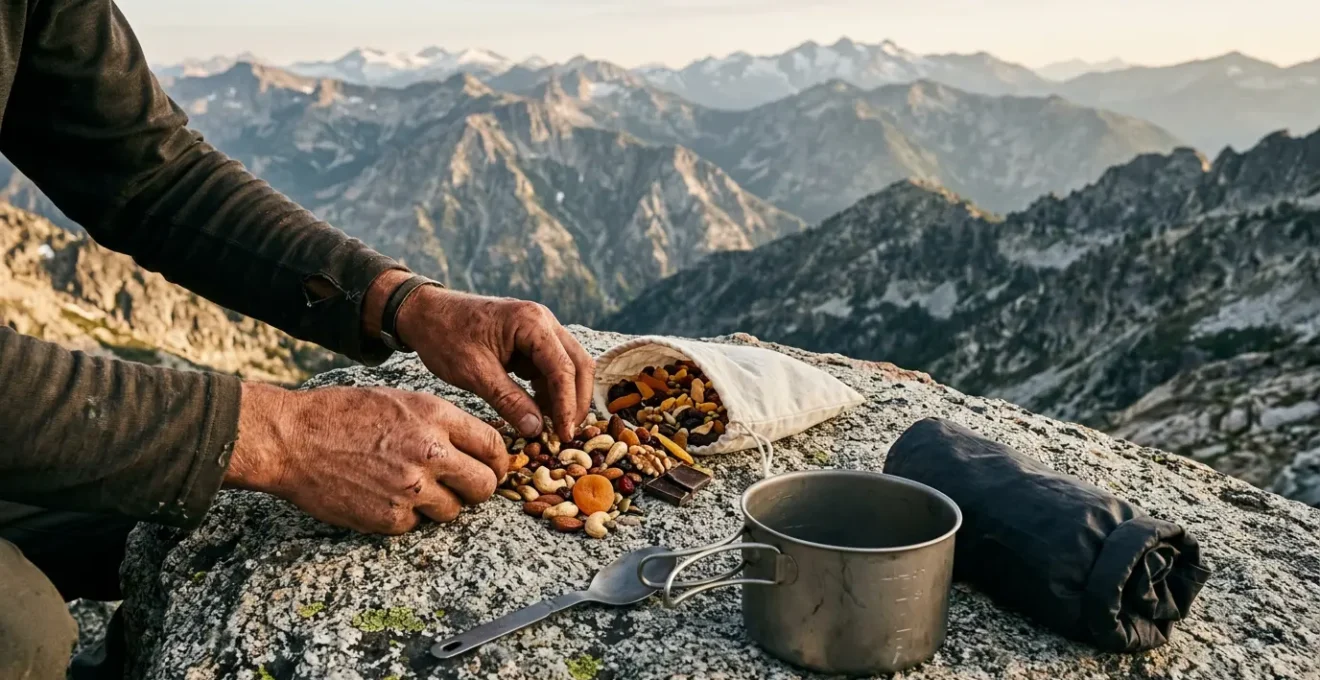
The intense fear of “hiker hunger” and the massive caloric deficit of a thru-hike often leads to generic advice like “just eat more.” This is a flawed approach. The key to finishing your trek without bonking isn’t just about volume; it’s about implementing a strategic metabolic fueling protocol. By treating your body as a high-performance engine, you can leverage nutrient timing, caloric density, and anti-inflammatory nutrition to manage your energy, prevent injury, and maintain mental fortitude from the first step to the last.
The specter of “hiker hunger” haunts every prospective thru-hiker. It’s a ravenous, all-consuming need for calories that can derail budgets, morale, and ultimately, the entire journey. You’ve heard the stories and seen the gaunt faces of finishers, and the fear of “bonking”—hitting a metabolic wall of complete energy depletion—is real. For a hiker attempting the Appalachian Trail (AT) or Pacific Crest Trail (PCT), the sheer scale of the caloric deficit can feel like an unsolvable equation.
The common wisdom is simple and direct: eat constantly, pack calorie-dense foods like olive oil and peanut butter, and indulge in town. While not wrong, this advice is dangerously incomplete. It treats the body like a bottomless pit, not the finely tuned endurance engine it needs to be. Filling that engine with random, low-quality fuel leads to performance drops, inflammation, and mental fog. What if the real key wasn’t simply eating more, but eating smarter? What if managing hiker hunger was less about satisfying cravings and more about executing a precise metabolic fueling strategy?
This guide reframes the entire conversation. We will move beyond platitudes and provide a nutritionist’s framework for long-distance hiking. We will analyze your body’s energy expenditure, deconstruct your resupply options, and connect the dots between what you eat and how you feel—physically and mentally. This is your metabolic road map to not just surviving, but thriving, on a long-distance trail.
To navigate this complex topic, we will break down the essential components of a successful thru-hike fueling strategy. Explore the table of contents below to understand how each piece, from resupply logistics to the psychology of solitude, contributes to your overall performance and success.
Summary: A Thru-Hiker’s Metabolic Fueling Guide
- Mail Drops vs Buying Local: Which Strategy Saves Money and Time?
- Zero Days: When to Rest Your Feet to Prevent Stress Fractures?
- The Town Trap: How Hotels and Burgers Destroy Your Thru-Hike Budget?
- The Real World Blues: Why Returning Home is Harder Than the Hike?
- Chafing and Rash: How to Stay Clean Enough to Avoid Infection?
- Calorie Deficit: How Much Weight Will You Lose on a 14-Day Trek?
- The Scale Doesn’t Lie: How to Weigh Your Gear to Find Hidden Kilos?
- Preparing Your Mind for Solitude: How to Handle Isolation on Solo Backcountry Trips?
Mail Drops vs Buying Local: Which Strategy Saves Money and Time?
The first strategic decision in your fueling protocol is procurement: how will you get your food? The two primary methods, mail drops and buying locally, are not mutually exclusive and a hybrid approach is often optimal. Mail drops offer control. You can pre-purchase nutrient-dense or diet-specific items in bulk, often at a discount, and ensure your nutritional needs are met in remote areas where local stores offer little more than chips and candy. This strategy demands significant upfront planning and cost but pays dividends in on-trail nutritional quality and long-term budget control.
Conversely, buying local provides flexibility. It allows you to respond to cravings, adjust quantities based on your evolving pace, and support local trail town economies. However, it exposes you to higher prices, limited selection, and the temptation to make poor nutritional choices when you’re tired and hungry. A survey of Appalachian Trail thru-hikers revealed that while 64% sent at least one mail drop, most relied on a mix of strategies. This suggests that a successful plan involves identifying key locations for mail drops (with specialized food) and budgeting for supplementary local purchases.
Case Study: The Hybrid Resupply Strategy
One experienced hiker demonstrated the power of a hybrid strategy for her PCT and AT thru-hikes. Over several months, she bought sale items and dehydrated her own meals, preparing 25 resupply boxes for a total food cost of only $1,200 before even starting the trail. This meticulously planned foundation of mail drops was supplemented with only specific “treat” purchases in town. By front-loading the cost and effort, she avoided the inflated prices and poor nutritional options of convenience stores, keeping her on-trail costs and nutritional quality firmly under her control.
Ultimately, the choice is not “either/or” but “when and where.” Use mail drops to deliver the high-quality, specialized fuel your body needs. Use local stores for high-volume, perishable, or craving-driven items like fresh fruit, cheese, and that celebratory pint of ice cream. This balanced approach optimizes nutrition, budget, and morale.
Zero Days: When to Rest Your Feet to Prevent Stress Fractures?
A “zero day”—a day with zero miles hiked—is not a sign of weakness; it’s a critical component of your metabolic and structural recovery protocol. The relentless pounding of a thru-hike inflicts micro-damage on bones, tendons, and muscles. Without adequate rest, this damage accumulates, leading to overuse injuries like stress fractures, which can end a hike in an instant. The Appalachian Trail Conservancy grimly notes, “Injuries are the number one reason that thru-hikers don’t finish the A.T.” Proactive rest is injury prevention.
While the ego might push you to hike on, your physiology dictates the need for breaks. While there’s no universal rule, research on long-distance hiker recovery patterns shows that most successful hikers average one zero day per week or every 7-10 days. This regular cadence allows the body to repair tissue, reduce inflammation, and replenish glycogen stores. Listen for the early warning signs: persistent pain that doesn’t resolve overnight, sharp or localized pain in the feet or lower legs, and a general feeling of deep, unrecoverable fatigue. These are signals from your body that a zero day is no longer optional, but mandatory.
Think of a zero day as a “Nutrient Reset Day.” It’s your single best opportunity to flood your system with the vitamins, minerals, and fresh foods that are scarce on the trail. This is the time to prioritize nutrient-dense calories over empty ones. Focus on lean proteins for muscle repair, fresh fruits and vegetables rich in antioxidants to fight inflammation, and healthy fats. A huge salad, a rotisserie chicken, and a carton of Greek yogurt will do more for your recovery than a second greasy burger.
As the image above illustrates, a recovery meal should be vibrant and varied. This is your chance to repair the cellular damage of the trail from the inside out. Use your zero days not just to rest your feet, but to strategically refuel your entire biological system for the miles ahead. This proactive approach to rest and nutrition is what separates those who finish from those forced to quit.
The Town Trap: How Hotels and Burgers Destroy Your Thru-Hike Budget?
Arriving in town after a week on the trail, you are at your most vulnerable. You are metabolically depleted, ravenously hungry, and psychologically craving comfort. This is the “Town Trap,” a perfect storm where months of careful budgeting and nutritional discipline can be obliterated in a matter of hours. The sheer caloric void you’ve created on the trail is staggering; some thru-hikers experiencing extreme hiker hunger have been documented consuming over 10,000 calories in a single day in town. This voracious appetite, combined with the inflated prices of trail town amenities, can quickly decimate your thru-hike fund.
The trap is twofold: financial and physiological. Financially, every dollar spent on an expensive motel room or a third restaurant meal is a dollar not available for the final, most challenging stretch of the trail. Physiologically, binging on greasy, low-quality food can leave you feeling sluggish, bloated, and ill-prepared for the climb back out of town. The goal of a town stop is to emerge stronger, not heavier and poorer. This requires a conscious, disciplined strategy to counteract the powerful pull of your depleted state.
To avoid the trap, you must have a plan before you even smell the first whiff of French fries. Your town visit should be a mission-oriented operation focused on three things: cleaning, resupplying, and strategic nutritional recovery. This means prioritizing tasks and making conscious choices, rather than letting your primal hunger make decisions for you.
Action Plan: 5 Strategies to Defeat the Town Trap
- Eat Before You Shop: Always consume a meal or a large, healthy snack BEFORE entering a grocery store to resupply. Shopping while hungry leads to buying excessive quantities and making poor nutritional choices driven by immediate cravings, not long-term fueling needs.
- Apply the ‘Grocery Store First’ Rule: Your first food stop should be a supermarket, not a restaurant. Satiate your initial, ravenous hunger with healthier, cheaper options like a rotisserie chicken, yogurt, fresh fruit, or a large salad from the deli bar.
- Calculate and Portion Precisely: Before buying, calculate the exact number of days until your next resupply. Purchase and pack only the food you need for that section. Carrying an extra day’s worth of food is dead weight that serves no purpose.
- Budget Your ‘Reward Meal’: Plan for one celebratory “reward meal” like a burger and beer. Enjoy it, then pivot subsequent meals toward targeted nutritional recovery. Focus on fresh produce and lean proteins that will actually help your body repair itself.
- Craft a Morning Exit Strategy: The morning you hike out, fuel with nutrient-dense foods, not a greasy diner breakfast. Oatmeal, eggs, and fruit will provide sustained energy, bridging the gap between town food and trail food and preventing that sluggish, “food coma” feeling on your first day back on trail.
The Real World Blues: Why Returning Home is Harder Than the Hike?
For many, the hardest part of a thru-hike begins after the last step. The transition back to “normal” life can trigger a profound and disorienting period of depression and aimlessness known as the “post-trail blues.” After months of singular purpose, constant motion, and deep community, the sudden stillness and complexity of the front country can feel like a crushing weight. You have conquered a mountain range, but now face the seemingly insurmountable challenge of grocery shopping, traffic, and existential dread. This isn’t a simple case of “the blues”; it’s a complex physiological and psychological withdrawal.
The intensity of this experience is often shocking. As thru-hiker and researcher Christine Haffner powerfully stated, “By going from hiking many miles every day to sitting on the couch, you’re effectively taking a morphine addict and putting them in rehab.” This is not an exaggeration. For months, your brain has been flooded with endorphins from 12+ hours of daily extreme exercise. When that stimulus is abruptly removed, your body goes into a state of neurobiological withdrawal, leading to a drop in mood, motivation, and overall well-being.
Case Study: The ‘SPACE’ Framework for Post-Trail Depression
In her research interviewing 20 thru-hikers, Dr. Anne Baker identified five core elements of trail life—forming the acronym ‘SPACE’—that are lost upon returning home. The neurobiological ‘opponent process theory’ helps explain the resulting depression. For months, extreme exercise creates a massive release of endorphins (the ‘A’ process). The body counteracts this with an opposing process (the ‘B’ process) to maintain equilibrium. When the exercise suddenly stops, the ‘A’ process vanishes, but the depressive ‘B’ process lingers, causing symptoms of withdrawal. The five lost elements are: Simplicity (wake, hike, eat, sleep), Purpose (a clear daily goal), Adventure (constant novelty), Community (the trail family), and Extreme exercise (the endorphin source).
The key to navigating this difficult period is to understand its biological roots and be gentle with yourself. Acknowledge that you are in recovery, not just from the physical toll of the hike, but from its profound psychological and chemical effects. Slowly re-engage with physical activity to taper off your exercise dependence, seek out community, spend time in nature, and give yourself the grace and time to find a new purpose beyond the trail.
Chafing and Rash: How to Stay Clean Enough to Avoid Infection?
While often discussed in hushed tones, skin health is a critical and frequently overlooked aspect of thru-hike success. Chafing, heat rash, and fungal infections are not minor annoyances; they are debilitating conditions that can lead to infection and force a hiker off the trail. While basic hygiene—using a bandana for a “hiker bath,” airing out feet, and keeping key areas as clean and dry as possible—is the first line of defense, a purely external approach is incomplete. Your skin’s resilience, its ability to resist friction and heal quickly, is profoundly influenced by your internal nutritional state.
The extreme physical stress of a thru-hike places immense demands on your body’s micronutrient stores. As research on athlete nutrition shows that vitamin and mineral stores are depleted more quickly during long-distance hiking, your body’s ability to repair skin and fight inflammation is compromised. A diet consisting solely of ramen and Snickers bars lacks the essential building blocks for healthy skin. To combat chafing and rash from the inside out, you must adopt an anti-inflammatory nutritional strategy.
This means going beyond simple calories and focusing on the quality of your fuel. Certain foods and nutrients have powerful properties that can bolster your skin’s defenses, reduce systemic inflammation, and accelerate healing. Integrating these elements into your resupply, especially via mail drops, is a non-negotiable part of a professional fueling protocol.
- Include Omega-3 and Omega-9 Rich Foods: Adding packets of olive oil to meals does more than just boost calories. Its high concentration of omega-9 fatty acids provides potent anti-inflammatory properties that reduce systemic inflammation from within.
- Pack Anti-inflammatory Spices: Micronutrients are nearly impossible to find in trail town convenience stores. Packing small amounts of turmeric, ginger, and other spices in your mail drops can provide powerful anti-inflammatory benefits.
- Maintain Electrolyte Balance: Proper sodium and potassium levels are crucial for hydration, which directly impacts skin elasticity. Well-hydrated skin is more pliable and less prone to damage from friction.
- Target Zinc and Vitamin C Sources: Specifically include trail-friendly foods or supplements that are rich in zinc and Vitamin C. These two micronutrients are essential for collagen synthesis and immune function, directly supporting skin healing and infection prevention.
- Support the Gut-Skin Axis: Your gut health is directly linked to your skin health. An imbalanced gut microbiome can manifest as skin problems. Including probiotic-rich foods or supplements helps maintain a healthy gut, which in turn supports resilient skin.
Calorie Deficit: How Much Weight Will You Lose on a 14-Day Trek?
The fundamental metabolic reality of a thru-hike is the caloric deficit. It is virtually impossible to carry and consume enough food to match the 5,000-7,000+ calories your body burns each day. Weight loss is not a possibility; it is a certainty. Understanding the scale of this deficit is the first step in managing it. The goal is not to prevent weight loss entirely, but to control its rate to a level that is sustainable and does not lead to “bonking” or the catabolic breakdown of muscle tissue for fuel.
Your daily energy requirement is a combination of your Base Metabolic Rate (BMR)—the calories you burn at rest—and the calories expended during activity. For a thru-hiker, that “activity” is 8-12 hours of walking with a loaded pack, an incredibly energy-intensive endeavor. While the average person might need 2,000-2,500 calories per day, a thru-hiker’s needs skyrocket. A daily deficit of 1,000 to 2,000 calories is standard, even when eating what feels like an enormous amount of food. Over a 14-day period, this can easily translate to a loss of 4 to 8 pounds, primarily from fat stores initially.
The table below, based on data from FarOut Guides, illustrates the stark reality of this caloric arithmetic for different hiker profiles. It highlights the gap between what your body needs and what you can realistically consume on the trail.
| Hiker Profile | Base Metabolic Rate (BMR) | Calories Burned Hiking (8 hrs) | Total Daily Requirement | Typical Trail Intake | Daily Deficit |
|---|---|---|---|---|---|
| 150 lb hiker (moderate pack) | ~1,800 cal | ~3,262 cal | ~5,062 cal | ~3,500-4,000 cal | -1,000 to -1,500 cal |
| Average male (175 lb) | ~2,163 cal | ~3,758 cal | ~5,921 cal | ~4,000-4,500 cal | -1,400 to -1,900 cal |
| Average female (140 lb) | ~1,605 cal | ~3,546 cal | ~5,151 cal | ~3,500-4,000 cal | -1,100 to -1,600 cal |
Managing this deficit means making every single gram of food you carry count. It’s a game of maximizing caloric density. This isn’t about dieting; it’s about survival and performance. A prolonged, unmanaged deficit will force your body to cannibalize muscle tissue, leading to weakness, increased risk of injury, and the inability to continue. Your job is to minimize the deficit on the trail and strategically erase it during your town stops.
Key Takeaways
- Your body is a high-performance engine; hiker hunger requires a metabolic fueling protocol, not just random calories.
- Nutrient quality and timing are as crucial as total caloric intake for preventing bonking, injury, and mental fatigue.
- Your mental state on the trail is directly linked to your metabolic state; a consistently fueled brain is a resilient brain.
The Scale Doesn’t Lie: How to Weigh Your Gear to Find Hidden Kilos?
On a thru-hike, weight is everything. While most hikers obsess over the weight of their gear—their “base weight”—the most successful endurance athletes apply the same ruthless scrutiny to the weight of their food. The title of this section is a deliberate misdirection; the scale that truly matters for your fueling strategy isn’t the one weighing your tent, but the one measuring your food in grams. Your goal is to maximize the calories-per-ounce ratio of everything in your food bag. This is the core of strategic metabolic fueling.
The guiding principle is caloric density. You have a limited capacity to carry weight, so every item must provide the maximum possible energy for its mass. Foods high in water or fiber, while healthy in normal life, become inefficient luxuries on the trail. Your target should be foods that exceed the average backpacking benchmark. While optimal trail food planning targets an average of 130 calories per ounce, the elite hiker-athlete pushes this boundary by selecting foods that are almost pure energy.
This is where the math becomes critical. The difference between a food that offers 110 calories per ounce and one that offers 170 is monumental when multiplied over a five-day food carry. Choosing the more calorically dense option means you can either carry less weight for the same number of calories or carry more energy for the same amount of weight. This is not just about comfort; it’s a direct investment in your performance and safety. The following table breaks down the caloric density of common trail foods, transforming your food selection from a guessing game into a calculated, strategic decision.
| Food Type | Calories per Gram | Calories per Ounce | Weight for 3500 cal | Performance Notes |
|---|---|---|---|---|
| Olive Oil | ~9 cal/g | ~255 cal/oz | 13.7 oz (388g) | Highest density, anti-inflammatory omega-9 |
| Nuts (mixed) | ~6 cal/g | ~170 cal/oz | 20.6 oz (584g) | High fat, protein, portable |
| Nut Butter | ~6 cal/g | ~170 cal/oz | 20.6 oz (584g) | Spreadable, versatile, calorie-dense |
| Granola | ~4.5 cal/g | ~127 cal/oz | 27.6 oz (782g) | Moderate density, some fiber |
| Energy Bars | ~4 cal/g | ~113 cal/oz | 31 oz (879g) | Convenient but bulky, lower density |
| Ramen (dry) | ~4 cal/g | ~113 cal/oz | 31 oz (879g) | Requires water carry, high sodium |
Preparing Your Mind for Solitude: How to Handle Isolation on Solo Backcountry Trips?
The greatest challenge of a solo thru-hike is often not physical, but psychological. The long hours and days of solitude can amplify anxiety, wear down motivation, and transform minor setbacks into major crises. While meditation and mental fortitude are important, there is a powerful, underlying physiological component to your mental state that most hikers ignore: your blood sugar. Your brain is an incredibly energy-hungry organ, and its stability is directly tied to your fueling strategy.
As nutritional biochemist Dr. Brenda Braaten states, “Blood sugar instability and calorie deficits (from under-eating) directly impact brain function, exacerbating feelings of anxiety, depression, and loneliness. A consistently fueled brain is a more resilient and positive brain.” When your blood sugar crashes, so does your mood, your patience, and your decision-making ability. The feeling of being overwhelmed by solitude might not be a failure of character, but a simple, correctable failure of your fueling plan. Maintaining stable blood glucose levels through consistent, strategic eating is one of the most powerful tools for managing the psychological demands of the trail.
Case Study: The Dopamine Reward and Decision Fatigue Strategy
Dietician Aaron ‘Sling’ Owens Mayhew demonstrated the power of strategic eating as a psychological tool during her PCT thru-hike. She combatted solitude and mental fatigue by eating every 45-90 minutes. This frequent, ritualized eating pattern provided a structural anchor to her day, breaking the monotony and providing small, consistent dopamine rewards. Her diet, which was 46% fats, provided slow-release energy, preventing blood sugar spikes and crashes. By having 6-8 pre-planned snacks daily, she eliminated food-related decision fatigue, freeing up mental bandwidth to cope with the larger challenges of navigation and isolation.
Your food is not just fuel for your muscles; it is fuel for your mind. A strategy of frequent, small, nutrient-dense meals does more than power you over the next pass. It stabilizes your mood, sharpens your focus, and builds the mental resilience needed to walk alone for thousands of miles. To conquer the mental game, you must first master your metabolic game.
By shifting your mindset from simply “eating” to “strategic fueling,” you transform food from a source of anxiety into your most powerful tool. A well-executed metabolic protocol is the key that unlocks not only your physical potential but also the mental fortitude required to complete a journey of this magnitude. The time to start planning your fueling strategy is now.