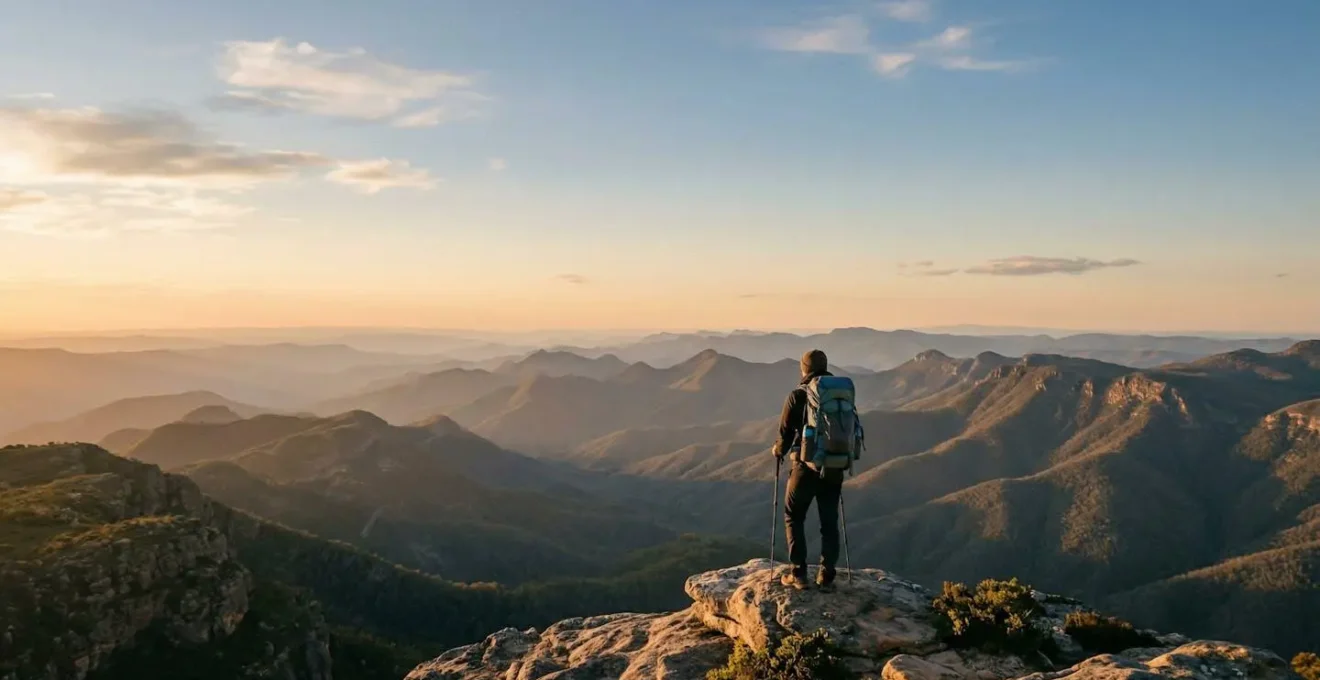
The deepest fear of a solo trip isn’t bears or bad weather; it’s the unnerving silence and the prospect of our own mind turning against us. This guide reframes mental preparation not as a passive hope to “embrace solitude,” but as an active, trainable skill. By understanding the predictable ways your brain reacts to isolation—from panic to paranoia—you can implement specific psychological strategies to manage your internal state, turning a journey of potential fear into one of profound resilience and self-reliance.
The silence of the deep wilderness is rarely silent. At first, it’s a symphony of wind, birds, and rustling leaves. But after a few days, another sound emerges, one that’s far more unsettling: the sound of your own mind, amplified. For the hiker planning their first solo backcountry trip, this is the true crux of the challenge. The physical preparation—gear, maps, fitness—is straightforward. The mental preparation is an abyss of “what ifs.” You’re not just worried about getting lost; you’re worried about losing your mind.
Common advice often misses the point. You’re told to “embrace the solitude” or “enjoy your own company,” platitudes that are useless when your heart is pounding at 2 a.m. because a twig snap sounded like a footstep. The conventional wisdom fails to acknowledge a fundamental truth: your brain is a social organ, hardwired over millennia for connection. Total isolation is an alien environment for it, and it will react in predictable, often alarming, ways.
But what if you could treat mental resilience like any other trail skill? What if, instead of simply hoping you don’t panic, you learned the psychological mechanics behind that panic and drilled the techniques to manage it? This isn’t about being fearless; it’s about being prepared. It’s about understanding that mastering solitude is not a matter of personality, but a matter of practice. This is your training manual for the expedition within.
This guide provides a psychological framework for your solo journey. We will dissect the brain’s response to silence, build routines to combat mental fatigue, differentiate real threats from paranoia, and prepare for the often-overlooked challenge of returning to civilization.
Table of Contents: The Psychology of Solo Wilderness Travel
- Why You Feel Panic After 48 Hours of Silence and How to Overcome It?
- How to Structure Your Camp Routine to Ward Off Decision Fatigue?
- The “Blair Witch” Effect: Distinguishing Rational Fear from Paranoia at Night
- Post-Trail Depression: What It Is and How to Soften the Landing?
- Solo vs Group Travel: Which Is Safer for Your Current Mental State?
- Monologue: Why Talking to Yourself Keeps You Sane?
- The Afterglow: How Long Do the Stress-Reducing Effects Last?
- Undertaking Solo Expeditions: How to Make Critical Decisions Under Stress?
Why You Feel Panic After 48 Hours of Silence and How to Overcome It?
Around the 48-hour mark, something shifts. The novelty wears off, and the silence begins to press in. This is when many solo hikers experience a sudden, inexplicable wave of anxiety or panic. This isn’t a sign of weakness; it’s a predictable neurological event. Without the constant external stimuli of daily life—conversation, traffic, notifications—your brain’s Default Mode Network (DMN) kicks into overdrive. The DMN is responsible for self-referential thought, daydreaming, and worrying about the past and future. As one expert puts it, for people prone to loneliness, “There is more activity in the DMN… These people spend a lot of time thinking about what happened in the past and what will happen in the future, all with feelings of worry, anxiety, and dread.” In the backcountry, you are creating the perfect laboratory for this to happen.
To overcome this, you must give your DMN a new job. Don’t fight the mental chatter; redirect it. This is where mindfulness practices become a survival tool, not a wellness luxury. Focus intently on sensory input: the feeling of the wind on your skin, the precise taste of your trail meal, the sound of your own breathing. Name five things you can see, four you can feel, three you can hear. This grounds you in the present and quiets the DMN’s anxious projections. Remember that this process, while uncomfortable, is also where growth happens. Indeed, research on wilderness solitude shows that for many, this initial challenge leads to a profound “emotional release and resting of the mind from anxiety.”
How to Structure Your Camp Routine to Ward Off Decision Fatigue?
In the wilderness, every choice matters, from where you pitch your tent to how much water you drink. While this heightened awareness is part of the appeal, it comes at a cognitive cost. Every decision you make, no matter how small, depletes a finite pool of mental energy. This phenomenon is known as decision fatigue. It’s the reason you might make a poor choice at the end of a long, stressful day. Research on this is stark; one famous study showed that judges’ favorable parole rulings dropped from 65% to nearly zero over the course of a session, only to rebound after a food break. On the trail, decision fatigue can lead to critical errors in navigation or safety.
The antidote is not to make better decisions, but to make fewer of them. The most effective way to do this is through a structured, non-negotiable camp routine. By automating the mundane tasks of setting up and breaking down camp, you preserve your cognitive resources for the unexpected challenges that truly require your full attention. Your routine becomes a ritual, a comforting anchor in the vastness of the wilderness. It creates order where there is none, reducing the mental load and providing a sense of control and accomplishment.
Your Pre-Trail Mental Automation Plan
- Choreograph Your Shelter: Practice setting up and taking down your tent at home until it’s pure muscle memory. Your sequence—poles first, then fly, then stakes—should be automatic, even in darkness or rain.
- Systematize Your Kitchen: Designate a specific, easily accessible place in your pack for your cook set, fuel, and “first night” meal. The process of boiling water and preparing food should be a simple, repeatable drill.
- Create a “Go-To-Bed” Protocol: Establish a fixed sequence for evening tasks. For example: filter water for the morning, secure food, change into sleep clothes, check headlamp, place boots upside down. This prevents late-night scrambling.
- Lay Out Tomorrow’s Uniform: Before sleeping, lay out or pack the clothes you will wear the next day. This single act eliminates a dozen micro-decisions in the cold morning air.
- Plan Your Morning Exit: Have a clear, rehearsed order for breaking camp. Coffee first? Tent down while water boils? A consistent exit strategy minimizes morning stress and gets you on the trail faster.
The “Blair Witch” Effect: Distinguishing Rational Fear from Paranoia at Night
Night falls differently in the backcountry. Darkness erases the landscape, and every snapped twig or rustle of leaves becomes a potential threat. This is the “Blair Witch” effect: your mind, deprived of visual data, begins to fill in the blanks with its worst fears. It’s crucial to understand that this is a normal psychological response. As research notes, solo experiences trigger fears related to both the tangible wilderness and, more profoundly, “fears of being alone and of the unknown within.” Your brain is a pattern-seeking machine, and in the absence of information, it defaults to a state of hypervigilance, assuming the worst-case scenario to keep you safe.
The key is not to eliminate this fear but to manage it with logic. You must learn to distinguish rational concern from irrational paranoia. A rational fear is hearing a large animal walking through your camp; paranoia is being convinced that the sound of wind in the trees is a predator stalking you. To do this, you need a protocol. When you hear a noise, stop. Breathe. Then, engage your logical brain: “What is the most likely cause of that sound?” 99.9% of the time, it’s wind, a small animal, or a piece of your own gear settling.
Case Study: The Resilience of Sarah Marquis
Adventurer Sarah Marquis, who has walked solo across continents, exemplifies the mastery of this mental skill. During her expeditions through environments teeming with genuine dangers like drug traffickers and wild animals, her survival depended on her ability to stay focused and adapt. Instead of succumbing to paranoia, she cultivated a state of calm awareness. She treated her fear not as an enemy, but as an informant, a signal to be assessed logically. This ability to maintain a positive, analytical outlook under extreme psychological pressure is a core strategy for any solo traveler facing the fears of the night.
Have a powerful headlamp ready. Often, simply illuminating the source of a sound is enough to instantly dispel the fear. You are not fighting monsters; you are fighting your own imagination. By systematically applying logic and observation, you train your brain to react with curiosity instead of terror.
Post-Trail Depression: What It Is and How to Soften the Landing?
You’ve done it. You faced the silence, navigated the trail, and returned home. But instead of elation, you feel a profound sense of dislocation and sadness. This is Post-Trail Depression (PTD), and it is an almost universal experience for those who complete long journeys. As the Appalachian Trail Conservancy bluntly states, “Nearly everyone suffers from post-trail depression upon returning home.” It’s not a clinical disorder in the official sense, but a very real and challenging period of adjustment. You’ve traded a world of clear purpose and stunning vistas for traffic, deadlines, and a society that doesn’t fully understand what you’ve been through.
The root of PTD can be brilliantly summarized by the acronym SPACE, coined by licensed therapist Anne K. Baker, PhD. She argues that PTD is a function of losing the five things that defined your trail life: Simplicity, Purpose, Adventure, Community, and Extreme exercise. As she explains, “From my perspective as a licensed clinician, so-called post-trail depression is a function of the loss of that SPACE,” a concept detailed in an insightful analysis on The Trek. Back home, life is complex, your purpose is less clear (hike, eat, sleep), adventure is scarce, your trail family is gone, and you’re no longer burning 5,000 calories a day.
Softening the landing requires conscious effort. Do not expect to slip back into your old life seamlessly. Plan your re-entry. Before you finish your trip, think about how you can incorporate elements of SPACE into your regular life. Schedule a small, local hike (Adventure). Plan a get-together with friends (Community). Find a new physical goal (Exercise). Most importantly, give yourself grace. Acknowledge that you have undergone a significant transformation, and it will take time for your life and your spirit to realign.
Solo vs Group Travel: Which Is Safer for Your Current Mental State?
After considering the psychological gauntlet of a solo trip—the DMN overdrive, the decision fatigue, the nightly paranoia—a critical question arises: is this truly for you, right now? The romantic image of the lone wanderer is powerful, but it’s a poor fit for everyone. The choice between solo and group travel isn’t just about logistics; it’s a crucial assessment of your current mental state and personality.
This requires radical self-honesty. As experts in survival psychology note, “Extroverts, who thrive on social interaction, may struggle more profoundly in isolation.” If you draw your energy from others, plunging into total silence might be more depleting than restorative. Conversely, if you are an introvert who finds social interaction draining, a group trip could introduce its own unique stressors. The key is to match the journey to your disposition, not force your disposition to fit the journey.
Experience also plays a vital role. Those with a history of solitary practice, whether through meditation, long-distance running, or previous shorter hikes, have already developed many of the necessary coping strategies. They have “calloused” their minds to the initial discomfort of solitude. If you have no such experience, a solo trip into deep wilderness is not a starting point; it’s a final exam you haven’t studied for. This isn’t about your ultimate potential, but your current readiness. Choosing a group trip or a less-remote solo trip is not a failure; it is a wise, strategic decision based on an accurate self-assessment of your mental resources. The mountains will be there next year, when you might be better equipped to meet them on your own terms.
Monologue: Why Talking to Yourself Keeps You Sane?
In movies, the person lost in the wilderness who starts talking to themselves is the one who is cracking. In reality, they are the one who is coping. Engaging in a running monologue is one of the most powerful and effective psychological tools for maintaining sanity in isolation. Far from being a sign of madness, it is a deliberate act of cognitive self-regulation. When you are alone, your internal thoughts can become a chaotic, looping, and often negative spiral. Giving those thoughts a voice—literally externalizing them—forces them into a linear, logical structure.
This “intentional monologue” serves several critical functions. First, it provides social simulation. You are, in effect, creating a companion. Narrating your actions (“Okay, now I’m going to set up the stove”) replaces the reassurance you might get from a partner. Second, it aids in problem-solving. Talking through a challenge, like a tricky stream crossing, allows you to evaluate options and formulate a plan more clearly than you could with silent, jumbled thoughts. It externalizes the decision-making process.
Finally, and perhaps most importantly, it is a tool for emotional management. As one survival guide puts it, “Positive self-talk may feel awkward, but it works. Saying things like ‘You’ve got this,’ ‘You’re doing fine,’ or ‘Let’s take it one step at a time’ helps regulate your nervous system and keeps you focused.” This isn’t about empty affirmations; it’s about actively taking on the role of your own coach and confidant. You become the source of the encouragement you need. So, talk to the trees, to your backpack, to yourself. It is the sound of you keeping yourself safe.
The Afterglow: How Long Do the Stress-Reducing Effects Last?
The challenges of a solo trip are immense, but so are the rewards. The profound sense of peace and resilience you cultivate in the wilderness isn’t just a fleeting “vacation high.” It’s a measurable physiological and psychological shift, an “afterglow” that can persist long after you’ve returned to civilization. The science behind this is increasingly clear. When you are immersed in nature, your body and mind respond by down-regulating stress responses. As psychologist Robert Coplan notes, “Just being outside lowers one’s heart rate and blood pressure and reduces levels of cortisol, the stress hormone.”
These are not just feelings; they are biochemical changes. A major 2019 meta-analysis found that “forest bathing” (shinrin-yoku) significantly reduced cortisol levels and lowered heart rates, providing a strong evidence base for the stress-reducing power of nature. Your solo trip is an intensive, multi-day dose of this potent medicine. You are not just removing the stressors of modern life; you are actively replacing them with an environment that promotes healing and calm.
How long does this afterglow last? The duration varies based on the individual and the intensity of the experience, but the key takeaway is that the effects are not permanent if the practice isn’t maintained. The resilience and calm you develop on the trail are like a muscle: they atrophy without use. The goal is not to live off the fumes of one great trip for a year. The goal is to integrate the *practice* of nature immersion into your regular life. The long solo expedition recalibrates your baseline, showing you what true calm feels like. It is then your job to seek out smaller, more frequent doses—a walk in a city park, a weekend hike—to maintain that new, healthier equilibrium.
Key Takeaways
- Your brain’s reaction to silence (panic, paranoia) is a predictable neurological event, not a personal failing. It can be managed with specific techniques.
- Structure is your best defense against mental chaos. A non-negotiable camp routine frees up cognitive resources for critical decisions.
- The transition back to normal life (Post-Trail Depression) is a real and difficult phase. Preparing for re-entry is as important as preparing for the trip itself.
Undertaking Solo Expeditions: How to Make Critical Decisions Under Stress?
Ultimately, a solo expedition is a series of decisions. Most are small, but a few may be critical, with your well-being hanging in the balance. The harsh truth of wilderness safety is that most serious mishaps are not caused by gear failure or environmental factors alone. As research on hiking safety reveals, the majority happen due to human factors: emotions, fatigue, or the poor decisions we make under their influence. When you are alone, cold, and tired, your ability to think clearly is compromised. This is the final boss of solo travel: making a life-or-death choice when you are at your most vulnerable.
This is where all your mental training converges. The ability to make a sound decision under stress is not a mystical talent; it is the direct outcome of the skills you have practiced. Your structured routine has preserved your cognitive energy (warding off decision fatigue). Your mindfulness practice allows you to quiet the panic (down-regulating the DMN) and assess the situation clearly. Your “intentional monologue” helps you talk through the options logically. Aron Ralston’s harrowing 127-hour ordeal, which culminated in the decision to amputate his own arm, is an extreme but powerful example. His survival was a testament not just to physical endurance, but to a mind that could stay functional and make an impossible choice under unimaginable stress.
Expedition Mindset: Pre-Launch Psychological Checklist
- Acknowledge Universality: Recognize that mental distress and psychological challenges are a normal, expected part of any serious expedition, affecting amateurs and professionals alike.
- Understand the Stakes: Be aware that mishandling extreme wilderness experiences can have long-term psychological consequences and impact your motivation to return to the outdoors.
- Identify Environmental Stressors: Acknowledge that the expedition environment itself—close quarters (even with oneself), high stress, sleep deprivation—is a primary source of mental strain.
- Prepare for Emotional Impact: Accept that harrowing encounters with extreme weather, unexpected route changes, or injuries can be difficult to manage emotionally and require a mental plan.
- Integrate Mental Planning: Commit to preparing for psychological challenges with the same rigor you apply to physical risks and logistical planning. Your mental health is part of your gear list.
Your pack is ready, your route is planned. But the most important preparation happens in the six inches between your ears. Treat your mind with the same respect as your most critical gear. Train it, understand its failure points, and practice its care. Your greatest expedition is the one within. Begin your mental training today.