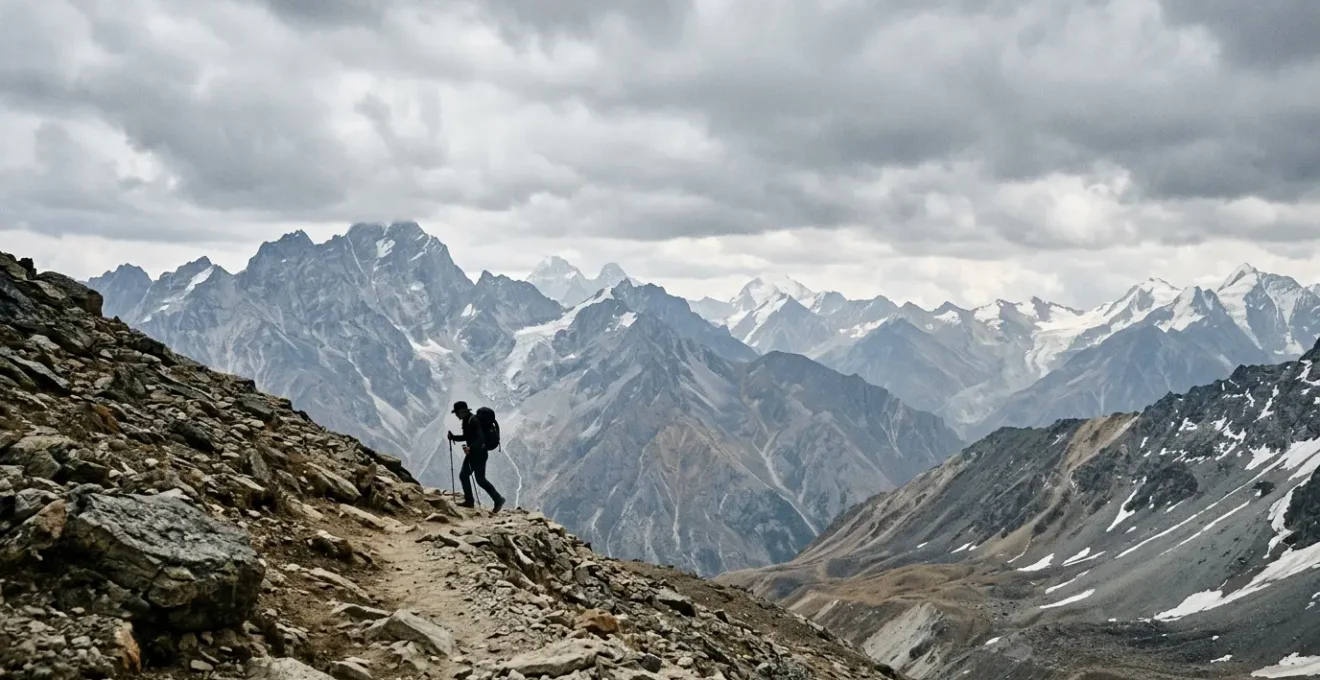
The key to succeeding on a multi-week, high-altitude trek is not brute force, but mastering a disciplined energy economy.
- Pacing is a data-driven protocol guided by strict ascent limits and heart rate monitoring, not just a vague feeling of “going slow.”
- Recovery is an active, strategic process involving deliberate campsite selection, targeted nutrition, and data-based rest days.
- Success begins before the trail, with logistics and permit planning that build in non-negotiable acclimatization buffers.
Recommendation: Shift from a “hiker” mindset to an “expedition leader” mindset—treating your body as your most critical asset, managed with discipline and foresight.
The dream of trekking a high-altitude circuit like the Annapurna or Huayhuash carries a shadow of anxiety for even the most prepared trekker. It’s not the fear of a single, hard day, but the creeping dread of cumulative fatigue—the burnout that can grind an expedition to a halt a week in. Common advice often feels frustratingly vague: “climb high, sleep low,” “listen to your body,” “stay hydrated.” While true, these are outcomes, not strategies. They don’t provide a system for managing your most critical resource over 14+ days of sustained effort in a low-oxygen environment.
The real challenge isn’t a single pass; it’s avoiding a slow descent into what can be called physiological bankruptcy. This is the state where your energy reserves are so depleted that recovery becomes impossible, and every step feels like a monumental effort. The solution isn’t to simply hike slower; it’s to adopt the disciplined mindset of an expedition leader. This approach reframes the entire trek as a campaign of strategic energy management, where every decision—from where you pitch your tent to how you plan your permits—is a calculated move to preserve capital and ensure you have the reserves to reach your objective and return safely. This guide provides that strategic protocol, moving beyond platitudes to offer a disciplined framework for pacing, recovery, and logistics.
This article will deconstruct the core components of this expedition protocol. We will explore how to manage your daily physical output with precision, how to optimize recovery in harsh environments, and how to build a logistical plan that serves as the foundation for your entire energy strategy. Let’s delve into the specifics.
Summary: Your Strategic Guide to High-Altitude Endurance
- Wind Exposure vs Flat Ground: Where to Pitch Your Tent at 4000m?
- Pack It Out: Why Burying Waste Doesn’t Work Above the Tree Line?
- Calorie Deficit: How Much Weight Will You Lose on a 14-Day Trek?
- The 11 AM Rule: Why You Must Cross High Passes Before Afternoon Storms?
- Tape and Drain: How to Fix Feet Without Stopping the Trek?
- The “Rest Step” Technique: How to Climb All Day Without Running Out of Breath
- Zero Days: When to Rest Your Feet to Prevent Stress Fractures?
- Planning Expedition Logistics: How to Secure Permits for Restricted Wilderness Areas?
Wind Exposure vs Flat Ground: Where to Pitch Your Tent at 4000m?
At 4,000 meters, your tent is not just a shelter; it is a strategic recovery chamber. The quality of your sleep directly dictates your performance capacity for the following day. Many trekkers prioritize a perfectly flat patch of ground, but an expedition leader prioritizes a defensible position against the primary energy thief at altitude: the wind. Wind chill dramatically increases metabolic rate as your body burns calories just to stay warm, sabotaging recovery before you even close your eyes. Furthermore, the constant flapping of a tent in high winds can prevent deep, restorative sleep.
The physiological cost of poor sleep at altitude is well-documented. A 40-day expedition study on a Mount Everest climber found an almost perfect correlation between increasing altitude and deteriorating sleep quality. The study revealed that awake time represented 17.1% of every sleep hour, a figure that worsened with elevation. This is compounded by the fact that your resting heart rate is already elevated. Research shows that at high altitude, your resting heart rate can be 20-40 beats per minute higher than at sea level as your body works harder to circulate oxygen. Choosing a poor campsite amplifies this stress.
The strategic choice is to always seek natural windbreaks. Look for depressions in the terrain, the lee side of large boulders, or clusters of rocks. This may mean accepting slightly sloped or uneven ground that requires more effort to level. This trade-off is always worthwhile. A sheltered site, even if imperfectly flat, provides a quieter, warmer environment that minimizes metabolic heat loss and maximizes the potential for restorative sleep. This decision is a foundational investment in your energy economy for the next day’s ascent.
Pack It Out: Why Burying Waste Doesn’t Work Above the Tree Line?
An expedition leader’s discipline extends beyond personal energy management to environmental responsibility. The “Leave No Trace” ethos becomes a non-negotiable protocol, especially above the treeline where the environment is exceptionally fragile and slow to recover. The common practice of burying waste, particularly human waste and food scraps, is fundamentally flawed in high-altitude environments. Below the treeline, in rich soil with abundant microorganisms, warmth, and moisture, organic matter decomposes relatively quickly. Above it, the equation changes entirely.
In the cold, often frozen, and sterile soil of the alpine zone, there is a near-total absence of the microbial life necessary for decomposition. Waste does not break down. Instead, it is essentially mummified by the cold and low oxygen levels. According to waste management research, decomposition time for buried waste at high altitude is a matter of years, not months. Buried waste is often exposed later by wind, erosion, or animal activity, contaminating water sources and scarring the landscape for future generations. This is not just an aesthetic issue; it’s a critical health and environmental hazard in popular trekking regions.
The only responsible protocol is to pack out everything you pack in. This includes all food packaging, used toilet paper, and, where regulations require, all human waste using approved waste-disposal bags (WAG bags). This requires a strategic shift in pre-expedition planning. By repackaging food into reusable containers and minimizing single-use wrappers before you even leave home, you significantly reduce the volume and weight of the trash you will have to carry. This discipline is a hallmark of a professional approach, demonstrating respect for the mountains and a commitment to preserving them.
Calorie Deficit: How Much Weight Will You Lose on a 14-Day Trek?
On a long, high-altitude trek, your body becomes a furnace, burning anywhere from 4,000 to 6,000 calories per day. It’s nearly impossible to carry and consume enough food to match this expenditure, meaning you will operate in a calorie deficit. Weight loss is not a possibility; it is a certainty. The strategic question is not *if* you will lose weight, but *what kind* of weight you will lose. Unmanaged, a severe calorie deficit leads your body to cannibalize not just fat stores but also muscle tissue for energy. This is a direct threat to your expedition’s success.
Losing muscle mass (lean body mass) directly reduces your strength and endurance, accelerating the slide towards physiological bankruptcy. You become weaker each day, making the trek progressively harder and increasing your risk of injury. Crucially, research on high altitude trekking showed that weight loss is composed of approximately two-thirds fat mass and one-third lean body mass. Losing a third of your power source is a catastrophic failure in energy management. The goal is to minimize this muscle loss by being strategic with your nutrition.
This means prioritizing calorie-dense foods rich in fats and proteins. While on the move, constantly snack on nuts, dried fruit, and energy bars. In the evening, your meal must be a deliberate act of recovery, focused on replenishing glycogen stores and providing protein for muscle repair. As one experienced thru-hiker noted, “Operating in a calorie deficiency works well for me as long as I keep a moderate pace with my heart rate at or below 60% of my threshold.” This highlights the link between pacing and nutrition: a disciplined pace reduces daily energy expenditure, making the inevitable calorie deficit more manageable and less damaging to your lean muscle mass. Strategic fueling is the cornerstone of your energy economy.
The 11 AM Rule: Why You Must Cross High Passes Before Afternoon Storms?
In high mountains, the weather is a clock. As the sun heats the valleys in the morning, moist air rises, condenses, and forms clouds. By early afternoon, this process often culminates in convective storms, bringing high winds, snow, and lightning—especially to high points like passes. The “11 AM Rule” is a time-tested expedition protocol: be on the pass, and preferably descending the other side, before the weather turns. It is a non-negotiable deadline that dictates the entire rhythm of your day.
To meet this deadline without exhausting yourself, you must employ a disciplined pacing strategy known as a “negative split.” This means starting the day’s ascent at a pace that feels intentionally and almost uncomfortably slow. The goal is to keep your heart rate low and conserve energy for the final, steepest push to the pass. Instead of long, infrequent stops, take regular micro-breaks (2-3 minutes every 30 minutes) to manage breathing and heart rate without letting your muscles cool down. This methodical approach ensures you reserve 30-40% of your perceived energy for the most critical part of the climb.
This daily discipline is nested within a larger acclimatization strategy. A widely accepted guideline for high-altitude trekking is to limit your daily ascent. As experienced guide Ian Taylor states, a common guideline is “not to ascend more than 300-500 meters (about 1000-1600 feet) per day above 2,500 meters (8,200 feet).” Adhering to this rule is the most effective way to prevent Acute Mountain Sickness (AMS) and ensure your body is adapting, not just enduring. The 11 AM rule and the daily ascent limit are two sides of the same coin: rigid, data-driven protocols that prioritize safety and long-term sustainability over speed.
Tape and Drain: How to Fix Feet Without Stopping the Trek?
On a multi-day trek, your feet are not just a mode of transport; they are mission-critical assets. A single, poorly managed blister can become so painful it can end an expedition. An expedition leader doesn’t wait for problems to arise; they implement a system of proactive maintenance. The “tape and drain” method is a reactive fix, but the real strategy lies in preventing blisters before they ever form. This requires a level of vigilance that borders on obsessive.
The moment you feel a “hot spot”—a slight stinging or rubbing sensation—you must stop immediately. Not at the next rest stop, not in five minutes. Now. That hot spot is the precursor to a blister, caused by friction. By stopping and applying a piece of durable tape, like leukotape or moleskin, you create a protective second skin that eliminates the friction against your actual skin. This simple, 30-second action can prevent hours or days of pain and potential infection. Letting a hot spot develop into a full-blown blister is a critical failure of personal management.
This vigilance should be systematized into your daily routine. Every time you take a scheduled break, make it a habit to perform a full foot check. This proactive protocol is your best defense against foot-related issues that could compromise your trek. By addressing potential problems when they are small and manageable, you maintain the integrity of your most valuable asset.
Your Proactive Foot Check Protocol
- During every scheduled break, remove socks and boots completely to air out your feet and reduce moisture.
- Visually inspect all high-friction zones (heels, toes, ball of the foot) for red spots, which are blister precursors, before any pain develops.
- Address any identified red spots immediately with preemptive taping using a durable athletic tape like leukotape or moleskin.
- Check for moisture accumulation and apply foot powder if necessary to keep feet dry and reduce friction.
- Examine your toenails for pressure points and adjust your boot lacing technique to prevent “toe-bang” on descents.
The “Rest Step” Technique: How to Climb All Day Without Running Out of Breath
The secret to climbing sustainably for eight hours a day is not exceptional fitness, but exceptional efficiency. The “Rest Step” is the cornerstone of this efficiency, a simple but profound technique that transforms a relentless climb into a manageable, rhythmic ascent. It allows you to move continuously without ever hitting your anaerobic threshold, the point where you gasp for air and are forced to stop. The principle is simple: with each step, you transfer your body weight onto a straight, locked leg, allowing your skeleton, not your muscles, to support your weight for a brief moment.
In that split second of rest, your other, non-weight-bearing leg’s muscles get a micro-recovery. By linking thousands of these steps together, you eliminate the muscular fatigue that forces long, momentum-killing breaks. To execute it, take a small step uphill, lock the knee of that forward leg, and consciously pause, resting your full weight on that bone structure. Then, swing the other leg forward and repeat. The rhythm should be slow, deliberate, and hypnotic: step, lock, rest; step, lock, rest.
This technique is supercharged when combined with rhythmic breathing. A vital technique, as explained by The Hiking Tribe, is ‘Pressure Breathing,’ which “involves forcefully exhaling through pursed lips to increase oxygen saturation in your lungs.” By synchronizing your breath with your steps—for example, one full breath cycle per step on a moderate incline, or two breaths per step on a steeper section—you create a sustainable cadence. When you combine the locked-leg rest step with a forceful, pursed-lip exhale during the “rest” phase, you are actively managing both your muscular energy and your oxygen levels. This is the micro-mechanic of the pacing discipline in action.
Key Takeaways
- Pacing is a Science: Success depends on data-driven rules like the 300-500m daily ascent limit and monitoring your morning resting heart rate, not vague feelings.
- Recovery is an Action: Effective recovery is not passive. It requires strategic decisions about campsite selection, targeted nutrition to prevent muscle loss, and proactive foot care.
- Planning is the Foundation: Your energy management strategy begins at home by building acclimatization and contingency days directly into your logistical plan and permits.
Zero Days: When to Rest Your Feet to Prevent Stress Fractures?
In the relentless forward progress of a long-distance trek, the decision to stop for a full day can feel like a failure. For an expedition leader, however, a “Zero Day” is not a sign of weakness; it is a strategic weapon. Deployed correctly, a zero day is an investment in longevity that can prevent the kind of deep-seated fatigue that leads to overuse injuries like stress fractures. The key is to make the decision based on data, not just on subjective feelings of tiredness.
Your most reliable piece of data is your morning resting heart rate (RHR), taken before you get out of your sleeping bag. Establish a baseline RHR during the first few days of the trek. A sustained elevation in this number is a clear signal that your body is not fully recovering overnight. As a rule, training experts recommend that a resting heart rate of 10-15 bpm above your trek baseline for two consecutive mornings is a non-negotiable signal to take a zero day, regardless of your itinerary. Ignoring this objective recovery metric is to gamble with your expedition’s success.
A zero day should be a day of active recovery, not total sloth. The priorities are deliberate hydration (consuming 4-6 liters of water), prioritizing protein-rich meals to aid muscle repair, and performing gentle stretching routines. It is also a critical opportunity for gear maintenance: inspect your boots, repair equipment, and reorganize your pack. Just as important is mental rest. Put away the maps and GPS. Read a book, write in a journal, or simply be present. A well-timed zero day resets the system, allowing you to resume the trek with renewed physical and mental reserves, turning a potential breakdown into a strategic consolidation.
Planning Expedition Logistics: How to Secure Permits for Restricted Wilderness Areas?
The ultimate expression of the expedition leader mindset is understanding that physical pacing on the trail is the final step in a strategy that begins months earlier, at a desk, with maps and permit applications. The pace of your trek is fundamentally determined by the logistics you plan. For restricted areas requiring permits, the itinerary you submit is not just a bureaucratic formality; it is a declaration of your acclimatization strategy.
Permitting authorities want to see a safe, realistic plan. Trying to impress them with a fast itinerary is a rookie mistake that raises red flags. Instead, build your credibility by demonstrating a deep understanding of acclimatization. Analyze itineraries from established commercial guide companies; they have optimized their schedules over decades. Use their pacing as a baseline, then build in even more buffer. Plan your daily distances and ascents to be 20-30% shorter than your sea-level fitness would suggest. Most importantly, build explicit “acclimatization days” into your permit application at critical elevations.
As expedition guide Ian Taylor notes from his extensive experience, “After 7 years of research in the Everest region…we have found that when we have more acclimatization around 3,500m/11,500 feet elevation we see much better adaption.” Building a mandatory rest day into your permit at this elevation shows you are planning based on physiological principles. This approach of building contingency logistics—extra days for weather, rest, or side trips—directly into your official plan is the foundation of a successful, low-stress expedition. Your permit becomes your pacing plan, a commitment to a sustainable and safe journey.
By adopting this strategic, disciplined approach—managing your energy, planning for recovery, and building a robust logistical foundation—you transform yourself from a hopeful hiker into a capable expedition leader, ready to meet the profound challenges of the world’s highest trails.